Reimagining Muslim Spaces

The Reimagining Muslim Spaces (RMS) study aims to stimulate and support mosques and community centers to meet the diverse social, civic, and economic needs of their congregants with special attention to often marginalized groups, including women, youth, and converts. Utilizing case study analysis produced by the RMS study, mosques and community centers can reduce barriers to participation, improve services they offer and increase constituent engagement. With implementable recommendations, the RMS study will contribute to improved community building, reduced marginalization, and increased community cohesiveness.

ISPU began this study by assembling a multidisciplinary group of stakeholders—from mosque leaders to disillusioned young people, women, converts, and members of ethnic and racial minority groups—to advise on the project and test recommendations. ISPU then analyzed existing national data and conducted primary qualitative research in three hubs: Metro-Detroit, the DC/Maryland/Virginia area, and the Bay Area, California.

ISPU also identified exemplary models of mosques and community centers that have high participation rates for young people, with a special focus on women and converts, and exceptional programs that meet the needs of their constituents. Using this data-driven research approach and actionable recommendations, the RMS study aims to move the concept of being “unmosqued” from a buzzword to a solvable social challenge.

ISPU developed a community education toolkit, including case studies and community briefs, that mosques and community centers can use to practically implement the RMS study’s recommendations. Case studies focus on engagement and inclusivity, social service programming, civic engagement models, and governance issues. This is a roadmap to help communities transform their current spaces into ones that are inclusive to all community members and responsive to their collective needs. To bring the research directly to communities, ISPU created an Inclusivity Workshop Toolkit, including videos, participant surveys, and exercises centers can use to address issues and create an action plan for incorporating study recommendations.
RMS at a Glance

What if you were asked to recall the best moment you had at a mosque? The time that was most fulfilling, when you felt most excited and inspired about being there. We asked American Muslim women this question, and here is what we found.

Allison, Daniel, and Kayla are converts to Islam. Follow their journeys to see how their mosques created welcoming, inclusive, and dynamic environments for them to grow in their faith.

In the wake of tragedy, it is hard for Muslim and allied leaders, communities, and institutions to manage the fallout and increased scrutiny. ISPU’s case study examines how the Islamic Society of Boston Cultural Center (ISBCC) effectively responded to the Boston marathon bombing.

Talk Toolkits

ISPU worked with the Yaqeen Institute to integrate ISPU research into a series of khutbahs developed by Yaqeen, allowing communities around the country to receive evidence-based and inspiring Friday sermons. These toolkits are specifically developed as a tool to empower and equip imams, youth directors, MSA leaders, and Islamic schools to address topics relevant to the concerns of American Muslims today.

Want to use ISPU | Yaqeen Talk Toolkits to start conversations about women’s inclusivity, civic engagement, community racism, Islamophobia, social services, devotion to faith, or reclaiming the narrative about Islam? Read more and view the materials.

Explore Our Talk Toolkits

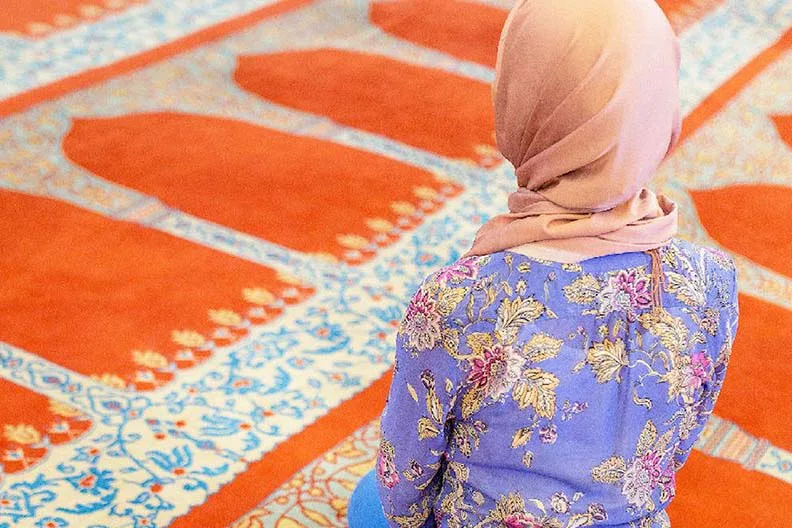
A person wearing a light pink headscarf and a purple floral top is sitting on an ornate red and blue patterned prayer rug, viewed from behind.

Organize Your Own Inclusivity Workshop

After conducting extensive research, analyzing the data, and creating a set of practical recommendations, ISPU has been traveling across the country sharing our findings directly with mosque leaders, volunteers, and attendees via a two-hour interactive workshop. In order to increase our reach, we’ve turned our traveling workshop into a virtual one, enabling interested people to use our material to hold a workshop in their mosque.

Download the Workshop Toolkit

See our YouTube page for videos 2–4 of this series.

Report 2 of the US Mosque Survey 2020: Perspectives and Activities

The US Mosque Survey 2020 is a comprehensive statistical study of mosques located in the United States. The survey is an ongoing decadal survey which was conducted previously in 2000 and 2010. The purpose of the US Mosque Survey is to conduct a scientific study that will generate accurate information about most aspects of the American mosque. The goal is to provide a detailed portrait of the American mosque to dispel misconceptions and to help mosque leaders and participants better understand their mosque, hopefully leading to improvements.

Report 2 of the US Mosque Survey 2020: Perspectives and Activities is available now. Report 2 focuses on Islamic approaches in understanding Islam, perspectives of mosque leaders on American society, mosque activities, women in the mosque, and the perspectives and activities of Shi’ite mosques. Report 1 was released in June 2021 and focuses on essential statistics, mosque participants, mosque administration, and the basic characteristics of Shi’ite mosques.

Report 2 of the US Mosque Survey 2020

The ISPU study is one of the first chances we start to scientifically look at the phenomenon of what’s probably been going on for a long time.
Halim Naeem
Psychologist
I want to see our mosques be that welcome mat to convene and to nourish and to empower communities. This study is going to show us all the different elements of that for women, youth and converts.
Syed Mohiuddin
Former Board Member, United Way of Southeastern Michigan

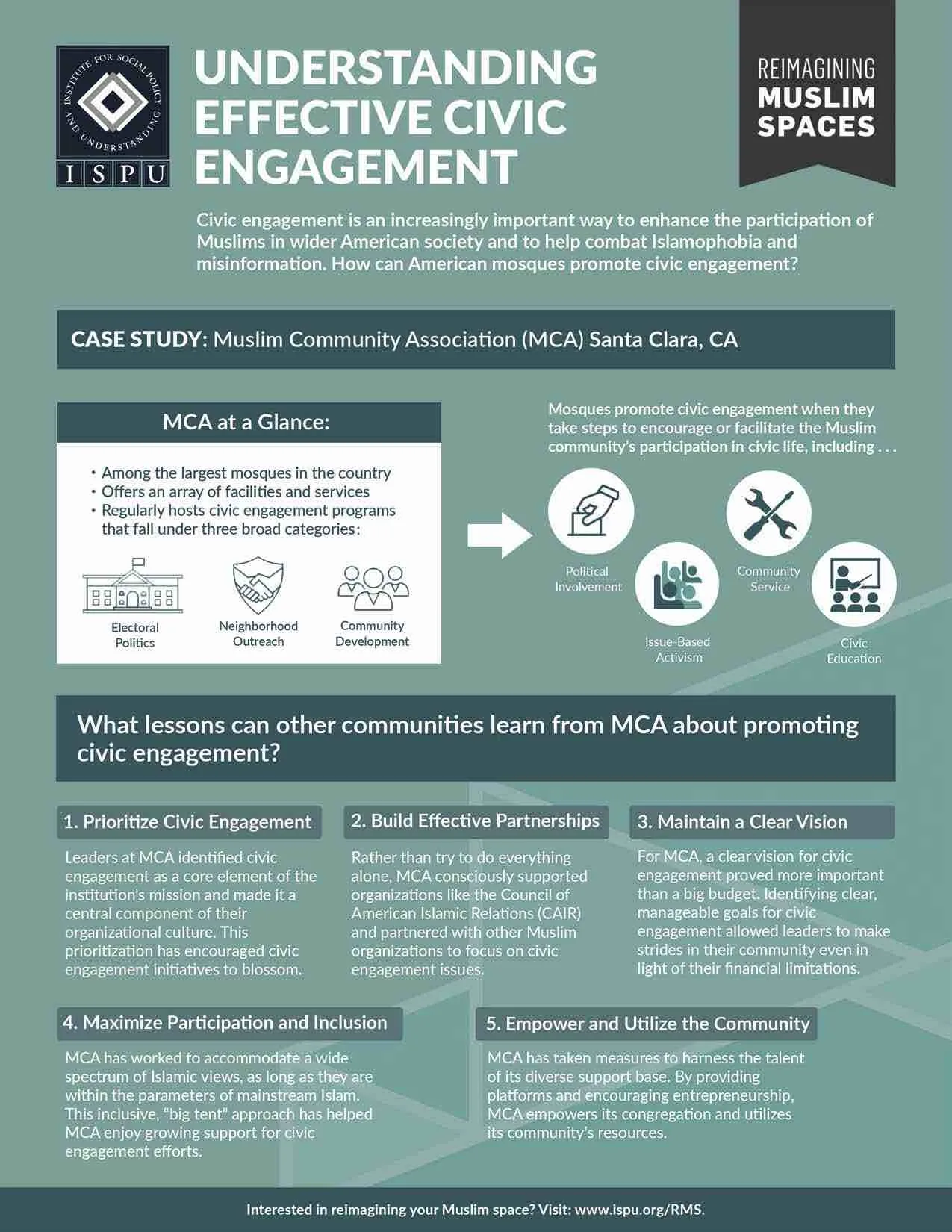
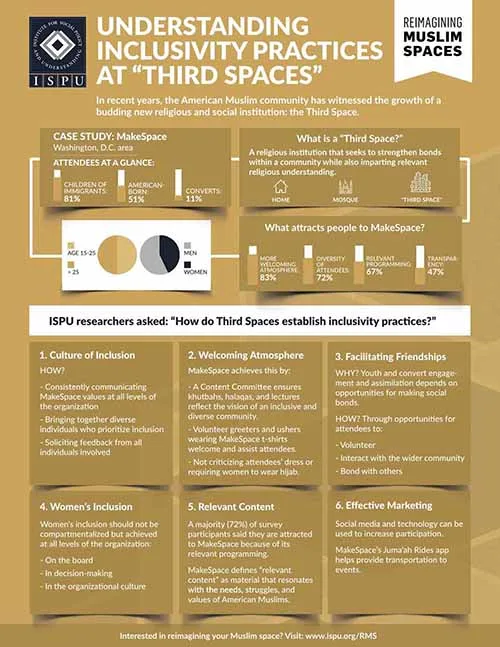
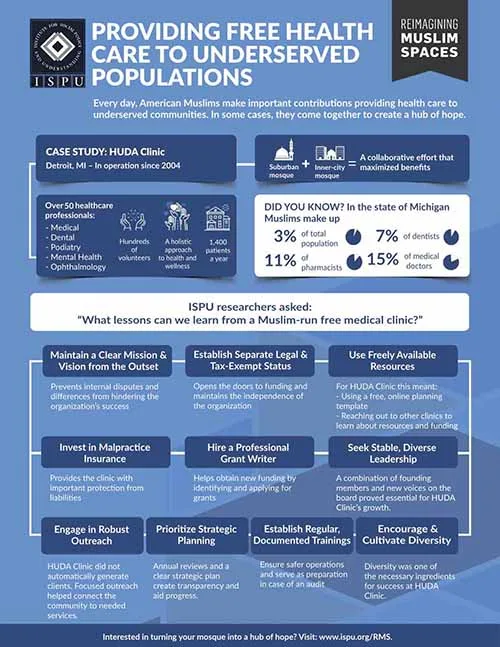
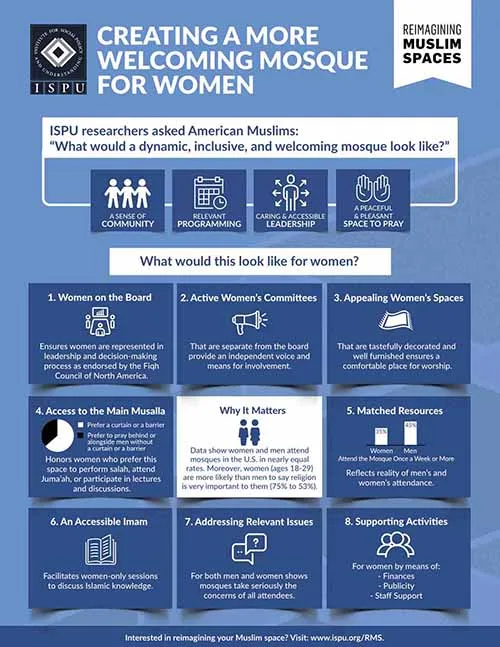
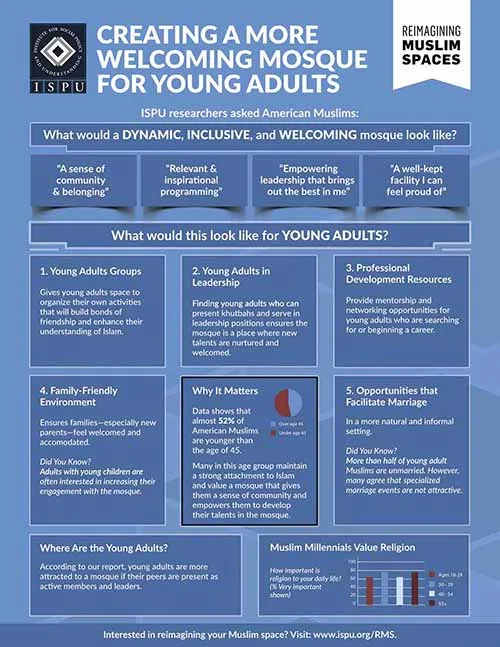
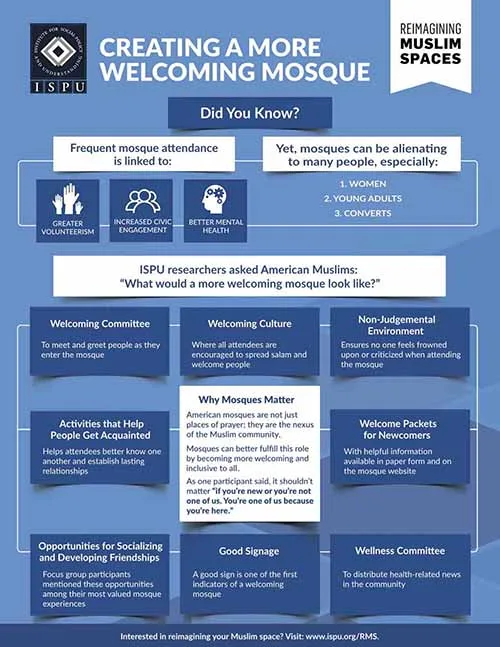
Infographics

RMS Reports

In an effort to enable Muslim communities across the country to build inviting, resilient and

This is the Executive Summary for ISPU’s Reimagining Muslim Spaces (RMS) report on creating a

RMS Case Studies

This first report in ISPU’s “Reimagining Muslim Spaces” series presents a case study of the

This second report in ISPU’s “Reimagining Muslim Spaces” series presents a case study of the

This third report in ISPU’s “Reimagining Muslim Spaces” series presents a case study of the

This fourth report in ISPU’s “Reimagining Muslim Spaces” series presents a case study of MakeSpace,

This fifth report in ISPU’s ‘Reimagining Muslim Spaces’ series presents a case study of the

This sixth report in ISPU’s ‘Reimagining Muslim Spaces’ series presents a case study of the

Other Relevant Reports

Countering Anti-Muslim Opposition to Mosque and Islamic Center Construction and Expansion: Full Toolkit May 23,

Evidence-based recommendations that can be implemented by all who work in connection with Islamic schools.

How can we provide better support to convert youth? According to Ta’leef Collective, over 20,000

This report is intended as a best practices guide for faith communities, as well as

This report is intended as a best practices guide for U.S. municipal authorities—elected officials, municipal

During the summer of 2004, the Institute for Social Policy and Understanding (ISPU) released the

Mosques are the cornerstone of the Islamic experience in America. One sign of the growing

How can predominately South Asian and Arab American mosques promote a greater understanding of race

Meet the Research Team

Dr. Ihsan Bagby
Principal Investigator and Fellow, Institute for Social Policy and Understanding
Associate Professor, University of Kentucky

Faiqa Mahmood
Lead Researcher and Fellow, Institute for Social Policy and Understanding

Afif Rahman
Research Assistant, Institute for Social Policy and Understanding

Nashwah Akhtar
Research Assistant, Institute for Social Policy and Understanding

Dalia Mogahed
Director of Research, Institute for Social Policy and Understanding

Sarrah Buageila
Project Manager, Institute for Social Policy and Understanding

Meet the Advisory Council

Marwa Ali
Filmmaker, Unmosqued documentary
Previous Muslim Chaplain, Trinity College and Wesleyan University

Shahed Amanullah
Co-founder and Director,
Affinis Labs
CEO and Co-founder,
LaunchPosse
CEO and Founder, Halalfire

Hazem Bata
Former Secretary General, Islamic Society of North America

Patrick Cates
Managing Director, DREAM of Detroit
Program Advisor, Beacon Foundation

Ahmed Eid
Filmmaker, Unmosqued documentary
Founder, MIIM Designs
Undergraduate Advisor, Harvard University Department of Architecture

Tannaz Haddadi
Founder and President of the Board, Next Wave Muslim Initiative

Butheina Hamdah
Former Development Associate, Institute for Social Policy and Understanding

Dr. Altaf Husain
Vice President, Islamic Society of North America
Assistant Professor, Howard University School of Social Work

Iffa Kazi
Operations and Special Projects Manager, El-Hibri Foundation

Saleem Khalid
Executive Director, Muslim Enrichment Project

Farhan Latif
President, El-Hibri Foundation

Atif Mahmud
Filmmaker, Unmosqued documentary

Hind Makki
Curator and Founder, Side Entrance blog

Meira Neggaz
Executive Director, Institute for Social Policy and Understanding

Sarah Sayeed
Former Board Member, Women in Islam, Inc.
Author, “Women Friendly Mosques and Community Centers”