American Muslims in the 2016 Election and Beyond

In the midst of a polarized and heated election season in 2016 where Muslims were frequent subjects of national debate, the Institute for Social Policy and Understanding (ISPU) set out to discover what American Muslims wanted for themselves. ISPU researchers set out to answer three key questions:

  • Why: What is the case for American Muslim civic and political engagement?
  • What: What are the main policy priorities for American Muslim communities
  • How: What do American Muslim communities need to do in the short term and the long term to increase political participation?

Methodology
This report is based on a combination of qualitative and quantitative research techniques. ISPU researchers based their analysis and recommendations on:

An older man in a suit, holding a clipboard, smiles and speaks to a woman standing in a doorway. The setting appears to be a residential neighborhood in daylight.

Strategies to Increase Effective Political Engagement: An American Muslim Case Study

This case study explores the journey of a group of American Muslims from northern Virginia that took measures to create and nurture an ecosystem to improve their community’s political engagement. The group’s strategic aim was to increase American Muslim participation and representation at local, city, county, state, and national levels through volunteer service, appointment, and election. Over time, the group cultivated meaningful and long-term relationships with candidates across political, racial, ethnic, and religious lines.

READ THE CASE STUDY

Report & Executive Summary

AME-2016-full-report-cover

In the midst of a polarized and heated election season in 2016 where Muslims were

In the midst of a polarized and heated election season in 2016 where Muslims were

Other Useful Reading

If the last two elections are any indication, candidates in the 2016 presidential race may

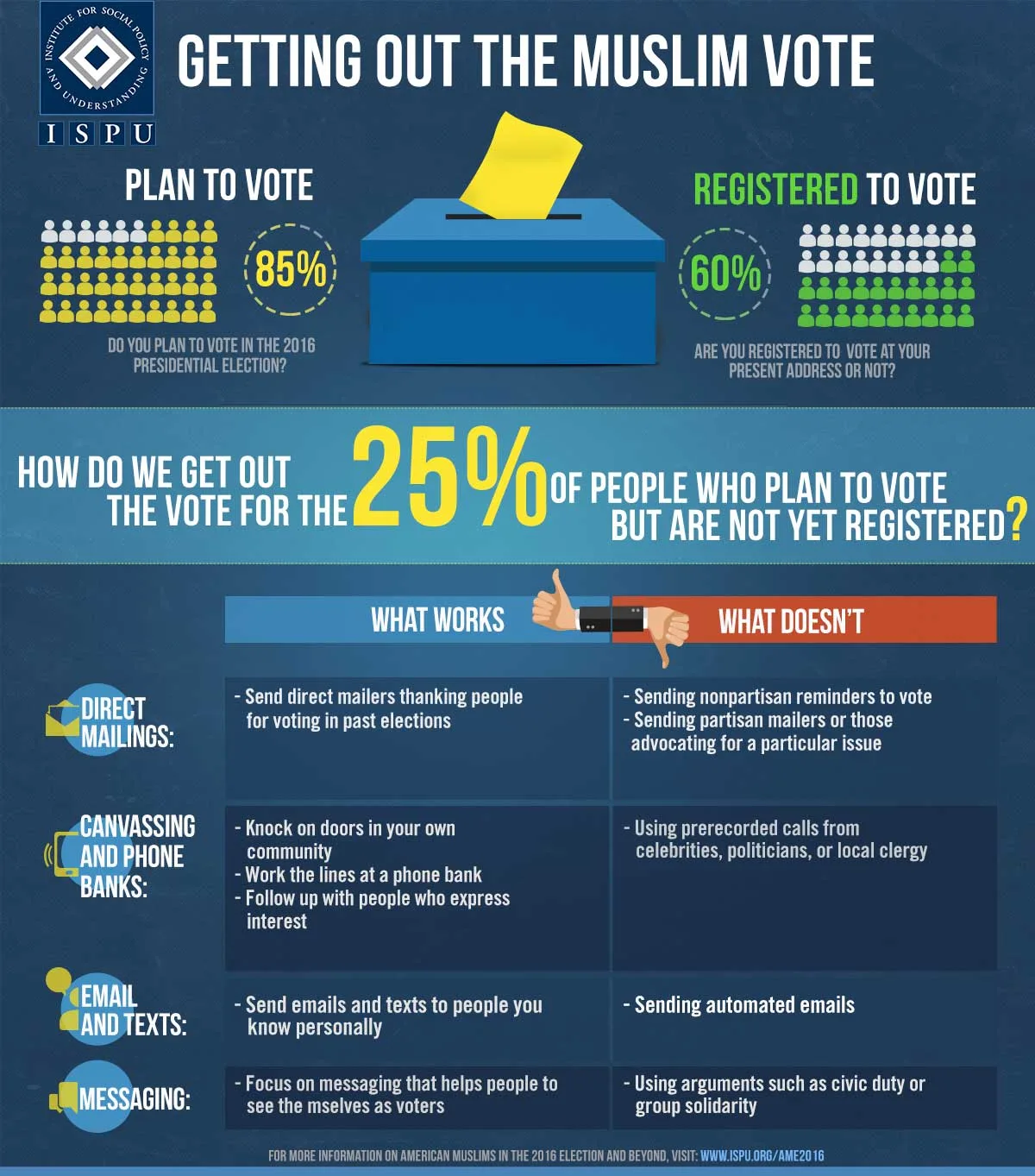
Recommendations at a Glance

Are you an ‪Inshallah Voter? Watch this video to find out.

Additional Resources

These resources may be helpful for political engagement organizers, though ISPU does not claim responsibility for the content.

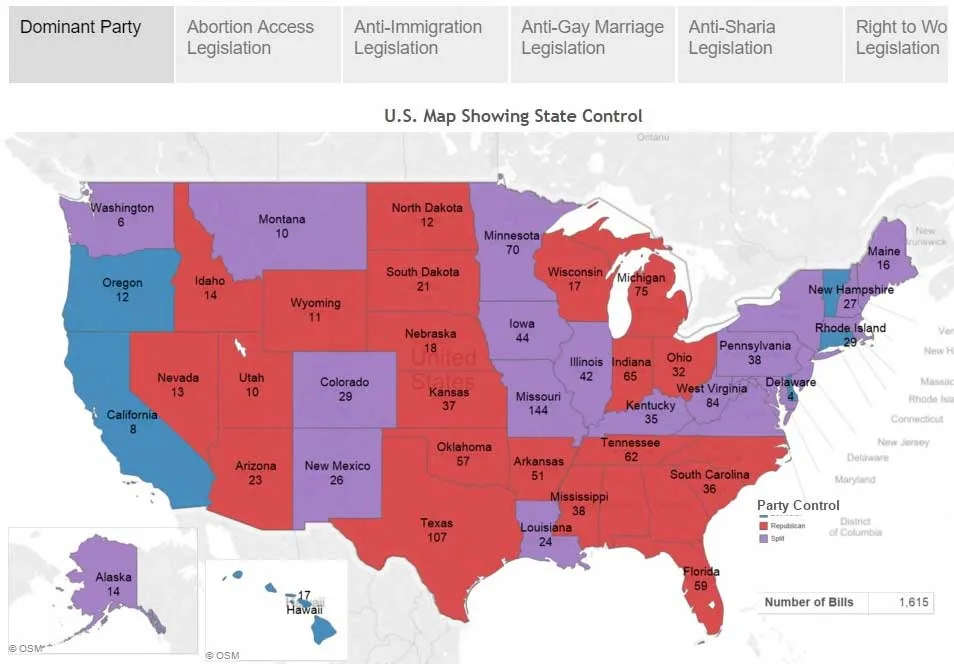
Restrictive Measures Map

Click the graphic below to view an interactive map that uses data from over 3100 bills across all 50 states to track which state lawmakers supported legislation targeting reproductive rights, voting rights, refugees, Muslims, and more.

Meet the Research Team

Dr. Tasneem Siddiqui
Primary Investigator
PhD from the Department of American Studies and Ethnicity at the University of Southern California (USC)

Laila Alawa
Secondary Investigator
CEO and Founder, The Tempest
Lead Marketing Strategist, PushBrand Marketing

Youssef Chouhoud
Senior Research Assistant
Assistant Professor at Christopher Newport University

Dalia Mogahed
Director of Research, Institute for Social Policy and Understanding

Sarrah Buageila
Project Manager, Institute for Social Policy and Understanding

Meet the Study Advisors

Amaney Jamal
Edwards S. Sanford Professor of Politics at Princeton University
Director, Mamdouha S. Bobst Center for Peace and Justice
Director, Workshop on Arab Political Development

Rashida Tlaib
Community Partnerships and Development Director, Sugar Law Center for Economic & Social Justice
First Muslim woman elected to the Michigan Legislature in 2008 and one of the first Muslim women elected to U.S. House of Representatives in 2018

Muqtedar Khan
Associate Professor, Department of Political Science and International Relations, University of Delaware

Rahfin Faruk
Harry S. Truman Scholar
Summa cum laude graduate, Southern Methodist University, Degrees in economics, political science, public policy, and religious studies