

“As a clinical researcher and epidemiologist I am well aware of the financial cost, human resources, time, and energy required to deploy large scale surveys and national polls. Through the Institute of Muslim Mental Health and in partnership with the Stanford University Muslim Mental Health Lab and The Khalil Center, we have contributed several mental health related questions to the most recently analyzed ISPU American Muslim Poll. It was a win-win partnership.
With our collective expertise in Muslim mental health and their ability to collect high quality information, we have recently completed an analysis of American Muslims’ attitudes and experience with mental health care. The research will continue to help mobilize resources to address the needs of the American Muslim community.”
“Our organization, Tayba Foundation, has served the education and reentry needs of over 9,300 incarcerated men and women across 42 states in over 500 prisons. Over 90% of our student population are African American and the majority converted while in prison.
So, we were very excited to attend the ISPU webinar on African Americans and mosque attendance to see what we could learn and take back to benefit our students. Myself and a number of the Tayba team attended the event and then had multiple follow-up team discussions about what was shared. The event and the research gave us more insight into some of the dynamics that we must consider. We know that part of successful reentry for returning citizens is to be part of a masjid community, and the ISPU research will aid in how we coach our clients and students on how to best bring regular masjid attendance into one’s life.”
“I was creating a health textbook with an Islamic focus for middle and high school aged Muslim youth. Certain topics are quite sensitive and controversial (such as premarital relations, genders, same-sex attraction, racism, reproduction, intoxicants, contraception, abortion, low self esteem, bullying, mental illness, sexual violence, domestic violence, divorce, etc).
I was able to cite ISPU’s research as evidence on the need to address such heavy and sensitive topics with our Muslim youth. ISPU’s research was an integral part in proving the reality of the struggles and hardship that many Muslim youth face.
Without this research, the Islamic Health series would not be able to provide evidence in most sensitive topics. It would have been based on speculation and assumptions, which is likely to be questioned.”
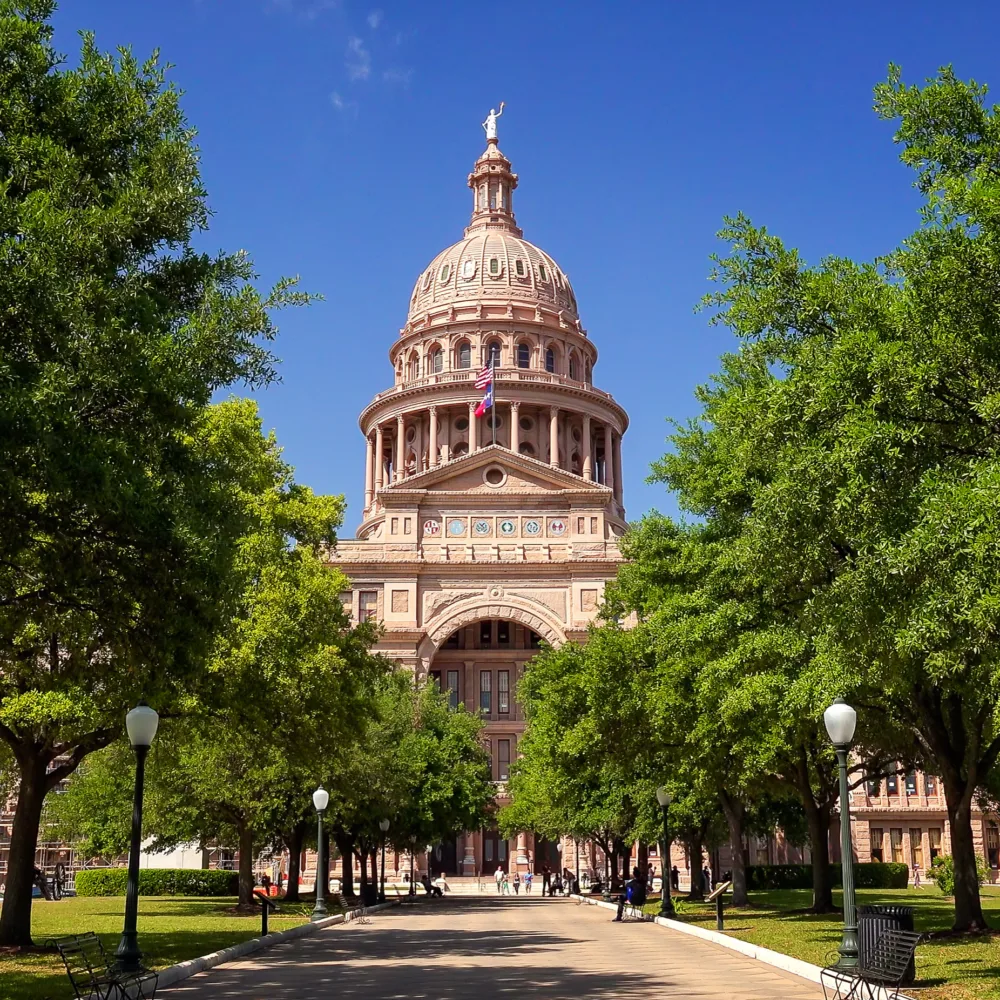
Grassroots organizers have worked to build relationships with key politicians in the Texas legislature in order to support a bill designating Eid to be recognized as a state holiday. ISPU’s data on civic engagement played a key role in this effort.
“We showed data on the number of Muslim voters, how involved they were in their communities, the average education and income levels, and the issues that were most important to Muslims,” ISPU Educator Tara Turk-Zaafran, who was involved in the effort, says. The outcome? “The bill passed, and Eid is an official holiday in Texas!”
Effective September 21, 2021, H.B. 1231 amended the Government Code to designate Eid al Fitr and Eid al Adha as optional holidays for state employees. “The research ISPU provides has the power to change the course of Muslim lives in America if used properly,” Tara says.
“ISPU’s hard facts were what I truly needed to present to my audience as we discussed Black History Month. I could see the faces of my panelists and audience brighten with surprise and amazement that there could be such well done research on a matter of interest for Muslims in America. I am not surprised, as I always use your data and research and find them so instrumental, enlightening, and invaluable.”
“ISPU’s work is a lifesaver. I use ISPU’s stats and data to educate a whole host of groups. Even when I meet groups skeptical of the challenges facing Muslims, ISPU’s data usually wins the day.”
“The rigorous research of organizations like ISPU provides the knowledge we need to act more intelligently, effectively, and, in the end, compassionately on behalf of all Americans. I can’t tell you how exciting it is to be part of the most diverse Congress in the history of the United States and how grateful I am to get to partner with ISPU to do the work of the American people.”
“ISPU research does a remarkable job in covering areas that are often overlooked in dialogue about the community. . . . ISPU is single-handedly the only solid resource for journalists covering Islam and the American Muslim community.”

Mentions of ISPU research in media outlets.
Institutions—including schools, mosques, media outlets, and more—trained with ISPU research.

Followers connected with on various social media channels, including Facebook, X, and Instagram.

National, state, and local policymakers and community leaders equipped with new resources and information.

Citations of ISPU research in academic publications.

Partners engaged across the nation and industries.
As executive director of digital content and innovation at VPM, Virginia’s home for public media, Angela Massino turned to ISPU resources when she began conceptualizing a new podcast on refugee resettlement more than two years ago. Her team used ISPU’s toolkit for journalists and data on demographics and Muslim experiences to inform their work all along the way
“I look at this research as a tool, like many tools, to help inform how we frame and inform a project—in the same way that we listened to many podcasts, read books, met with policy experts etc. What is unique though, is it specifically calls out issues in the past made by the media and their implications on public opinion. This is helpful, it reemphasizes the responsibility of the media and holds us accountable.”
We know anecdotally that Muslim college students suffer from Islamophobia, but there was room to learn much more. So, ISPU partnered with MSA West to survey over 500 Muslim college students across California, gaining important insights on the well-being of a vulnerable and under-researched population. What we discovered is already making an impact.
Sadia Khan is a legal studies major at UC Berkeley and a member of her campus’ MSA Political Action Committee.In 2019, she testified on a panel at a California State Assembly hearing on campus climate. During her testimony, Sadia shared with assembly members data from our report on how many Muslim students reported facing religious discrimination on campus…
Kevin Singer, co-founder and director of Neighborly Faith, says ISPU is a vital partner in the work to bring Christians and Muslims together across America. “We use [ISPU research] all the time to make a case for loving our Muslim neighbors as they really are, not who we think they are.”
ISPU joined Neighborly Faith for several events at Christian colleges in 2019, including a two-day conference at Wheaton College where Evangelical students gathered from across the country to learn how to build meaningful relationships with their Muslim neighbors.
“It is vital that we reach young Evangelicals and help them better understand who American Muslims really are,” Kevin says.
Teachers do so much more than teach math and language arts. Educators teach the next generation how to work together with empathy and mutual respect.
That’s why at ISPU, we use our research to create trainings for educators across the country. Empowered with the right data, ISPU-trained teachers help foster a safe learning environment for all of their students, especially those who happen to be Muslim.
Sara Sisco, a teacher at Potter’s House High School in Kent County, participated in our June training in Grand Rapids, Michigan and was immediately moved to integrate what she learned into her curriculum.
In 2016, our American Muslim Poll discovered that only 60% of American Muslims were registered to vote— that’s significantly less than any other American faith community.
Syed Ashraf and Mohib Ullah have been on the frontlines of the grassroots effort to change this statistic for years. Both are co-chairs of the ADAMS Civic Engagement (ACE) committee at the ADAMS Center mosque in Sterling, Virginia.
The ACE team found out early on that presenting their ideas for increased civic engagement to their community was difficult without documented evidence. In Mohib’s words, the data from ISPU’s American Muslims and the 2016 Elections report “gave us a voice that validated our statements.”
“I emphasize activism vs. passivity in my teaching and ISPU’s data on the challenges American Muslims face in their public religiosity serves as a wake-up call to my students. I wish our community had had access to this quality of information years ago!”
“I use ISPU research to reinforce my arguments, inform my rebuttals and to prove the absurdity of a world that far too often relies on fear and misunderstanding.”
“ISPU’s Islamophobia work is powerful. I use it all the time in my work organizing for social justice. Since hearing about the research, that showed the intersectionality between anti-Muslim bigotry and other types of bigotry, we have conducted more than 50 trainings to coalition build. And it works!”
As a mother of two teenage boys, Hena Khan constantly worries for them in this changing and uncertain world. “Like all parents, I often think about my kids’ futures. How can I create a better world for them today, quarantined at home? How can I create a safer world for them tomorrow in the classroom and one day in the workplace? ” she says.
While there is so much in the news to cause anxiety, she’s working hard to focus on the good and the trustworthy. One of the sources she turns to is ISPU, where she proudly served as a board member for six years.
Hena is also a best-selling author of children’s books, including Amina’s Voice, Golden Domes and Silver Lanterns, Under My Hijab, and It’s Ramadan, Curious George. As a writer and speaker, she use ISPU’s work to stay informed…
Imam Hassan Selim has led the Islamic Center for Cedar Rapids for more than four years. Like many in his position, he is tasked with forming a more inclusive mosque, one that can assist an always changing and diverse community in often challenging times.
One recurring obstacle was the lack of real-life examples of mosques that had overcome these same challenges. Imam Selim learned of ISPU, and our Reimagining Muslim Spaces (RMS) project, while attending a conference where our research was being presented by Executive Director Meira Neggaz.
According to Selim, “I was familiar with ISPU’s work, but had no idea how well it would fit the challenges I was facing until I heard ISPU’s presentation….”
The Muslim Ban. Christ Church. State level anti-Muslim legislation. Reporting on American Muslim communities and the issues that impact them has never been more challenging.
That’s why our workshops for media professionals are so important. They give journalists like Liz Kineke access to the facts, helping her cover American Muslims fairly and creatively.
ISPU “planted a seed about the need for better representation of Black Muslims—women in particular—in the media,” Liz says. “The choice I made to feature a young, Black woman came out of [ISPU’s training for journalists]. The seminar helped me see my gaps and blind spots in reporting on Muslims in America.”
Abed Ayoub, National Legal & Policy Director of the American-Arab Anti-Discrimination Committee, needed proof. Proof that Muslim-perceived perpetrators accused of ideologically motivated violence were receiving harsher treatment from the legal system.
“We would have cases like the one in the ISPU report come in and often couldn’t work on them. We would refer them out because our defense team and board didn’t think it was a priority and told us to work on Muslim ban or immigration issues…. We had no documented proof that these cases getting much harsher sentencing was a systematic problem and couldn’t convince the community we needed to target resources to it.”
Enter ISPU’s 2018 report Equal Treatment?.