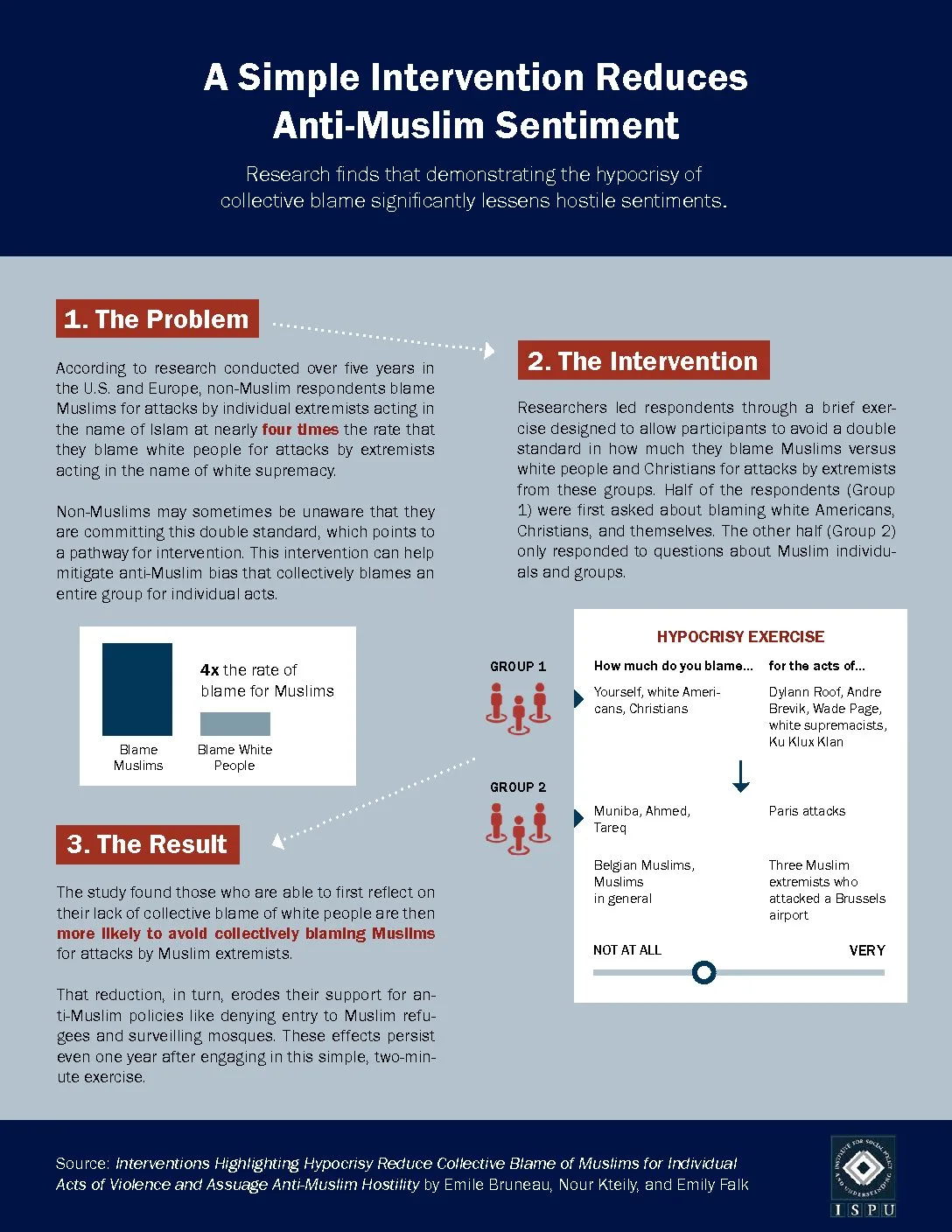
A Simple Intervention Reduces Anti-Muslim Sentiment

PUBLICATION DATE
Published March 12, 2021

Biography

According to research conducted over five years in the U.S. and Europe, non-Muslim respondents blame Muslims for attacks by individual extremists acting in the name of Islam at nearly four times the rate that they blame white people for attacks by extremists acting in the name of white supremacy.

Non-Muslims may sometimes be unaware that they are committing this double standard, which points to a pathway for intervention. This intervention can help mitigate anti-Muslim bias that collectively blames an entire group for individual acts.

This infographic helps demonstrate how the “hypocrisy of collective blame” can lessen hostile sentiment towards Muslims.

Download the infographic here.

——————————————————————-

Dr. Emile Bruneau was the founder and director of the Peace and Conflict Neuroscience Lab at Penn’s Annenberg School of Communication.

Recent Publications

This study examines the policy priorities and candidate preferences of Muslim voters in Georgia, Pennsylvania,

This study examines the policy priorities and candidate preferences of Muslim voters in Georgia, Pennsylvania, and Michigan, highlighting how the war in Gaza influences their electoral choices, including supporting third-party candidates, remaining undecided, or opting not to vote.

Insert your information to download the report.


ISPU uses this information to see which organizations and individuals are using our materials in an effort to better serve our audiences. We’ll also contact you (infrequently) with new research updates so you’re up to date on the latest from our research team. By downloading this report, you’re agreeing that your information can be shared with our partner organizations. Please email info@ispu.org if you would prefer your contact information not be shared or stored.

Read the Online Report

Table of contents
Authors
Share Article
Recent Research