Meeting the Needs of Muslim Youth

Getting Race Right
PUBLICATION DATE
Published January 13, 2016
Author

Zeba Iqbal

Any American born after 1990 probably doesn’t remember a world without smartphones, Facebook, and Game of Thrones. They also likely don’t recall a time when people kept their shoes on at airport security, could go all the way to the gate to see their friends off, or thought “Patriot Act” was just a good deed.

For American Muslims, membership in this generation presents additional challenges. Their religious community, according to polls, is among the least warmly regarded of any in the country and their country’s news media portrays their faith and community negatively 80% of the time. They face bullying, racial profiling and job discrimination. Moreover, they face the same challenges of growing up as any other American, from drug and alcohol abuse to online safety to risky sexual experiences. Like other Americans, their community also struggles with racism and a crisis of religious literacy. And American mosques leaders, like their counterparts in other faiths, are finding it difficult to meet the unique needs of young people.

ISPU’s American Muslim youth brief series addresses some of these challenges and offers actionable recommendations for parents, community leaders, and national organizations. We brought together practitioners and academics, imams and parents, local leaders and national figures, grandparents and college students to craft practical recommendations that could be applied in a variety of contexts. We hope these briefs help you meet the needs of this unique generation of American Muslims.

Deep Dive: Recommendations for Getting Race Right

In this webinar, experts Imam Dawud Walid and Dr. Jamillah Karim discuss how to create inclusive environments for African American youth at South Asian- and Arab-majority mosques.
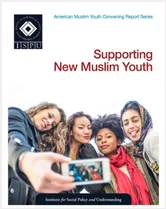
American Muslim Youth Report Series

How can we provide better support to convert youth? According to Ta’leef Collective, over 20,000

How can predominately South Asian and Arab American mosques promote a greater understanding of race

This report focuses on understanding and addressing the numerous challenges young American Muslims face online

What basic knowledge and literacy gaps about Islam are important to fill for American Muslim

What can American Muslim communities do to prevent and treat drug use among American Muslim

This infographic includes recommendations on creating inclusive spaces for Black Muslim youth from ISPU’s Getting Race Right brief.

Additional Resources

These resources may be helpful, though ISPU does not claim responsibility for the content.

Logo for The Family & Youth Institute showing a yellow house above the letters FYI in green, blue, and red blocks, with the organizations name in a semicircle above.

FYI Uplifting Black Muslim Youth Toolkit
The resources in this toolkit are meant to uplift and cater to the unique needs and realities of Black Muslim youth.

Logo of the Institute for Muslim Mental Health, featuring blue and green curved lines and a stylized figure, with the organization’s name written in blue text to the right.

Muslim Mental Health Clinical Directory
Find a Muslim therapist in your area by browsing this Institute for Muslim Mental Health directory.

Understanding the Leadership Enigma in the American Muslim Community (The Islamic Center at NYU, 2017)

Other Relevant Reading

Given the prevalence rates and negative mental health outcomes associated with religious-based bullying, it must

Evidence-based recommendations that can be implemented by all who work in connection with Islamic schools.

A blue geometric logo featuring two overlapping, eight-pointed star shapes forming a white diamond in the center, set against a dark blue background.

State of American Muslim Youth: Research & Recommendations

Despite the growing number of American Muslims in the United States, their frequent encounters with

“I am America. I am the part you won’t recognize. But get used to me.