
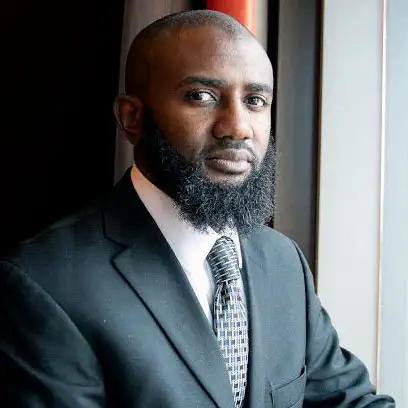
Quaiser Abdullah, PhD, is an Assistant Professor in the Communication and Social Influence Department in Klein College of Media and Communication at Temple University. He primarily teaches courses on conflict resolution and communication. Quaiser is the faculty advisor for the Muslim Student Association at Temple. He is a board member of the Interfaith Center of Greater Philadelphia, Good Shepherd Mediation Program, and the Association of Muslim Chaplains. He also serves as police chaplain for the 18th district in the Philadelphia Police Department and is currently the COO, interim director of the board, and imam at Quba Institute. Quaiser does consulting and training through his own company, Statera Coaching and Leadership Consulting. Quaiser is a certified Conflict Resolution in Education trainer, professional coach, conflict coach, positive discipline educator, and a trained mediator in the area of transformative mediation, with a focus on family, divorce and custody mediation.
Quaiser’s research interests center around identity and conflict, leadership and conflict management and religious identity. Quaiser authored a chapter entitled “Muslim Leader Formation and Education,” published by SAGE in the Religious Leadership: A Reference Handbook (2012). His chapter, “Daanaa Abdullah: Exemplar of Community Leadership” was published in Democratic Ethical Educational Leadership: Reclaiming School Reform in 2015 by Routledge.
