SOHAD MURRAR, PHD, LINA SAUD, PHD, AND ZAHRA MIRNAJAFI, PHD
Research shows news media coverage of Muslims is biased and linked to increased anti-Muslim attitudes and support for anti-Muslim policies. Little is known about the impact of entertainment media coverage of Muslims on intergroup attitudes and support for anti-Muslim policies. Muslims, a highly targeted group in the United States, are often depicted as villains (e.g., terrorists, chauvinists) in entertainment media. There is a dearth of research on the consequences of such tropes on people’s attitudes toward Muslims or the influence such tropes have on people’s support for policies that affect Muslims.
The objective of the current study is to understand the impact of positive and negative portrayals of Muslims in entertainment television. Specifically, we examined the effects of exposure to depictions of Muslims in television shows on people’s support for policies that are broadly undemocratic or specifically anti-Muslim, attitudes toward Muslims, and perceptions of Muslims.
Entertainment media has historically underrepresented minoritized groups and portrayed them in stereotypical ways (Dixon, 2019; Lamer et al., 2022; Mastro, 2009).¹ Given that Americans watch 32–34 hours of TV per week (Nielsen, 2024),² understanding the impact of media representations on intergroup attitudes has become a pressing concern.
News media biases against Muslims are pervasive. Terror attacks by Muslim extremists received over 350% more coverage than those by non-Muslim extremists between 2008 and 2015, despite non-Muslims carrying out the majority of attacks (Kearns et al., 2019; Miller, 2017).³ This biased coverage increases anti-Muslim prejudice (Ogan, Willnat, Pennington, & Bashir, 2014) and support for anti-Muslim policies (Saleem, Prot, Anderson, & Lemieux, 2017).⁴
Entertainment media can have mixed effects on intergroup attitudes. Positive representations can reduce prejudice when groups are depicted as relatable (Murrar & Brauer, 2019; Schiappa, Gregg, & Hewes, 2005), but negative portrayals can increase stereotyping (Weisbuch, Pauker, & Ambady, 2009; Vidmar & Rokeach, 1974).⁵ Muslims are frequently depicted as villains in entertainment media (Shaheen, 2012; Alhassen, 2018; Khan et al., 2021; Khan et al., 2022), though more nuanced depictions have emerged with increased Muslim representation in Hollywood.⁶ Given these mixed effects and changing representations, it is important to assess the impact of entertainment media depictions of Muslims on policy support, intergroup attitudes, and perceptions of Muslims.
The research team ran an experiment in which participants were randomly assigned to watch either a positive or negative depiction of Muslims in entertainment media to assess effects on support for various policies, intergroup attitudes toward and perceptions of Muslims. American participants were recruited through CloudResearch Connect, an online research platform for participant recruitment, from November 5, 2024, to January 16, 2025. All potential participants were prescreened to ensure they had no prior history of watching any of the shows that were being used in the study. To ensure a representative sample of the general U.S. population, participants were recruited to match U.S. Census demographics proportionally (e.g., on race, sex, age). A total of 747 participants were recruited. Of these participants, 73 people did not complete any of the outcome measures following episode viewing and were thus removed before analyses. This yielded a final sample of 674 people.
The research team completed an extensive TV show sourcing and coding process to select positive and negative representations of Muslims. Shows featuring Muslim characters were gathered through crowdsourcing from American Muslims and evaluated based on criteria including screen time for Muslim characters, ratings, and being American-produced post-2006. Thirty-two shows remained after elimination.
Episodes were systematically coded along 13 dimensions representing common trope areas (e.g., family relations, violence/terrorism, occupations) with four possible valences: positive, negative, mixed, or neutral. Episodes were selected based on the highest total positive or negative codes and pilot tested for comparable entertainment value.
All measures used in the study were previously validated in prior research and had strong reliability (α = 0.70 to 0.96). In some cases, we modified measures for the target group to be “Muslims” so the questions would apply to Muslims as the target group of this study. The study included measures for anti-democratic policy support, anti-Muslim policy support, positive treatment of Muslims, social distancing from Muslims, intergroup anxiety toward Muslims, warmth toward Muslims, symbolic threat from Muslims, identification with Muslims, Islamophobia Index, pro-diversity beliefs, passionate hate scale, and Muslim homogeneity.
The final sample included 674 participants, with 330 men, 340 women, and 4 participants who chose another gender identification or preferred not to respond. Participants ranged in age from 18 to 84, with a majority of participants being 25–34 (24%), 45–54 (23%), and 55–64 (18%). Racially, the sample was predominantly white (73%). In terms of education, the majority of participants carried a four-year college degree (45%). Regarding religion, the majority of participants identified as Christian (51%), followed by agnostic (21%). The average score for religious identification, M = 2.66, SD = 1.41, is below the midpoint of the scale, indicating that participants were less identified with their religion overall. Moreover, participants reported their political orientation with an average score, M = 2.63, SD = 1.27, below the midpoint, indicating that participants trended more liberal overall. The vast majority of participants were born in the U.S. (94%) and were U.S. citizens (99%).
To analyze the data, we compared responses of participants who viewed the positive depiction of Muslims (9-1-1: Lone Star, season 1, episode 3) and the negative depiction of Muslims (Criminal Minds, season 2, episode 10) on all the outcome measures. We used linear regression models to test the effects of experimental conditions on the outcomes. Specifically, we used a statistical method called orthogonal contrast analysis to determine if there were differences in outcomes on our survey measures between participants who viewed positive versus negative depictions of Muslims. A significant result from these analyses means that the difference between conditions is deemed “significant” or “statistically significant” if the p-value statistic is less than 0.05.
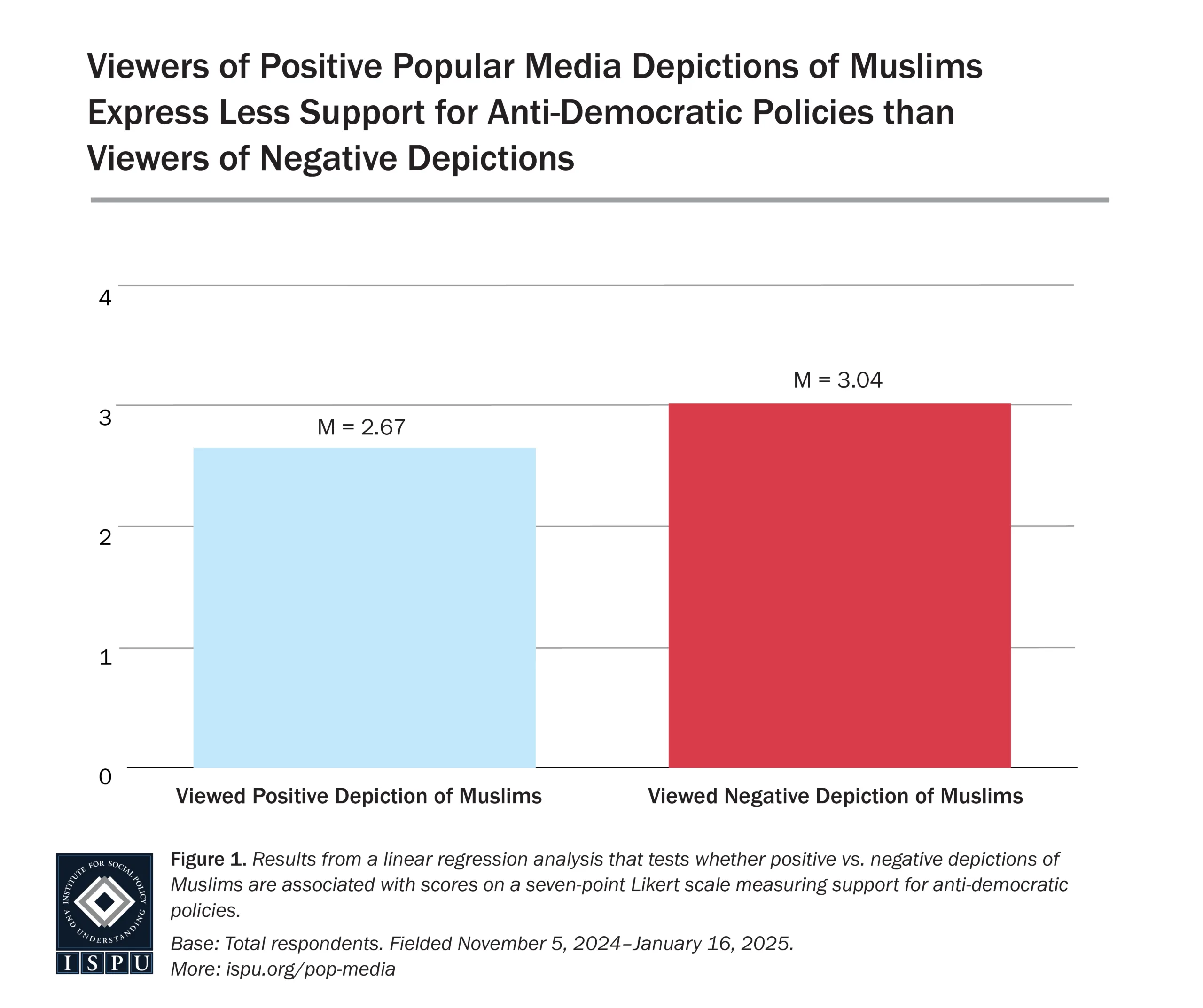
Viewers of positive Muslim representation showed significantly lower support for anti-democratic policies (M = 2.67, SD = 1.45) compared to those who viewed negative representation (M = 3.04, SD = 1.53).
Those who viewed positive Muslim representation were significantly more opposed to anti-Muslim policies (M = 2.10, SD = 1.26) than those who viewed negative representation (M = 2.32, SD = 1.28).
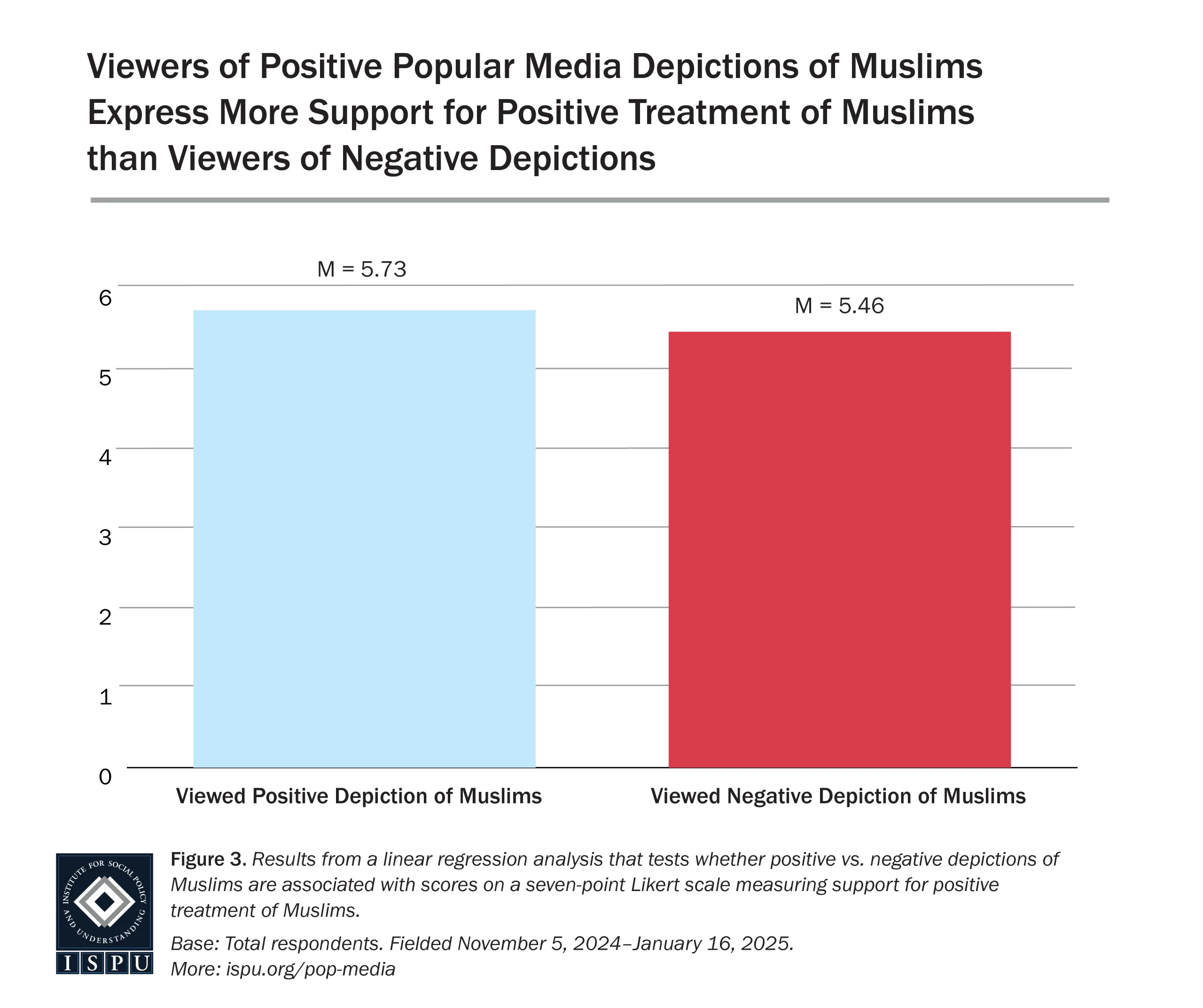
Viewers of positive Muslim representation were significantly more supportive of positive treatment of Muslims (M = 5.73, SD = 1.30) compared to negative representation viewers (M = 5.46, SD = 1.37).
Those who watched positive representation had significantly lower desires to socially distance themselves from Muslims (M = 1.78, SD = 1.09) compared to negative representation viewers (M = 2.14, SD = 1.37).
No statistically significant difference was found between positive representation viewers (M = 2.19, SD = 0.77) and negative representation viewers (M = 2.34, SD = 0.69) regarding intergroup anxiety toward Muslims.
Viewers of positive Muslim representation reported significantly higher warmth toward Muslims (M = 65.02, SD = 22.47) compared to those who viewed negative representation (M = 60.34, SD = 23.62).
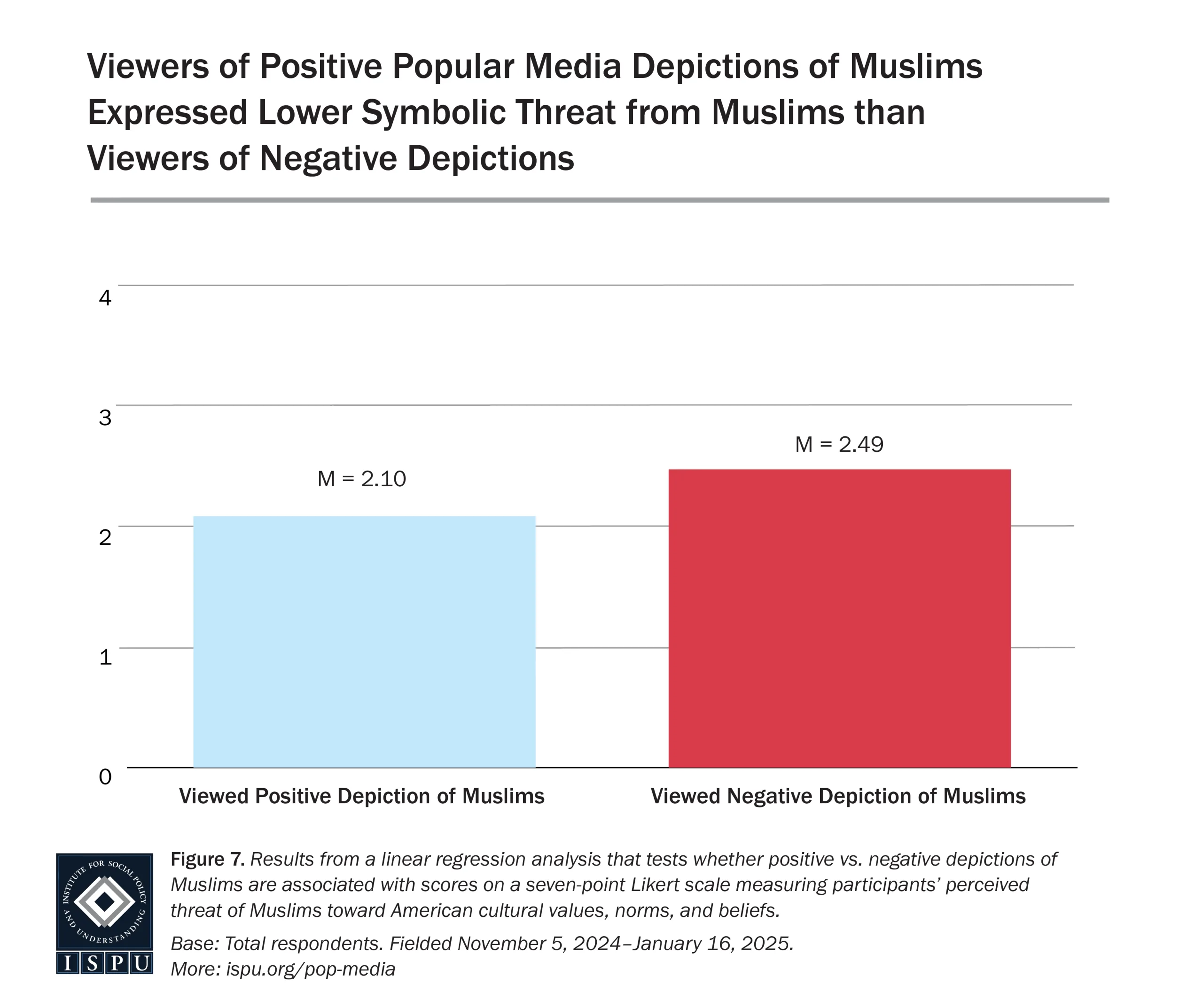
Those who viewed positive representation reported significantly lower perceived symbolic threat from Muslims (M = 2.10, SD = 1.44) compared to negative representation viewers (M = 2.49, SD = 1.65).
Viewers of positive Muslim representation showed significantly greater identification with Muslims (M = 41.13, SD = 21.13) compared to negative representation viewers (M = 35.33, SD = 19.40).
No significant difference in Islamophobia scores was found between positive representation viewers (M = 2.29, SD = 1.23) and negative representation viewers (M = 2.42, SD = 1.24).
No significant difference in pro-diversity beliefs was found between positive representation viewers (M = 5.58, SD = 1.44) and negative representation viewers (M = 5.50, SD = 1.46).
No significant difference in passionate hate scores was found between positive representation viewers (M = 1.44, SD = 0.99) and negative representation viewers (M = 1.59, SD = 1.05).
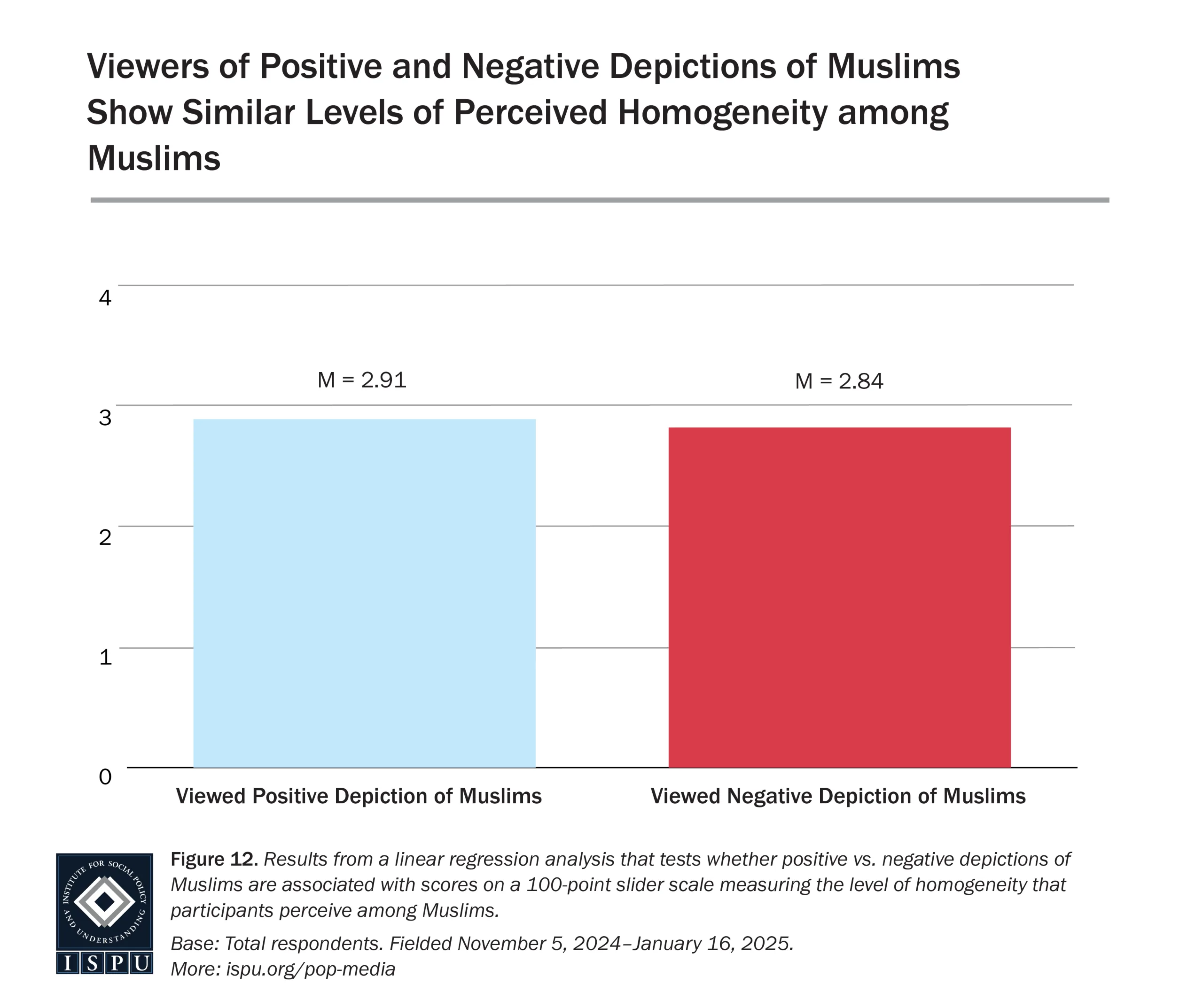
No significant differences were found in perceived homogeneity of Muslims between positive representation viewers (M = 2.91, SD = 1.19) and negative representation viewers (M = 2.84, SD = 1.15), likely because the shows focused on individual Muslim characters rather than the broader Muslim community.
In the current study, we found that positive depictions of Muslims in entertainment media lead to greater opposition to anti-democratic policies when compared to negative depictions. Similarly, we found that positive depictions of Muslims lead to more opposition to anti-Muslim policies than negative depictions. Critically, these findings demonstrate that the way in which Muslims are represented in entertainment media shapes Americans’ views on political policies that impact all Americans regardless of their faith, as well as policies that are particular to Muslims.
The study results also show that positive depictions of Muslims in entertainment media can lead to more positive intergroup attitudes and perceptions of Muslims. Watching a positive depiction of Muslims leads to more support for treating Muslims positively, less of a desire to socially distance from Muslims, and greater warmth toward Muslims compared to watching a negative depiction of Muslims. These findings may in part be because, as we observed in our study, viewing the positive depiction leads to lower perceptions of symbolic threat from Muslims and greater identification with them compared to viewing the negative depiction.
Taken together, the results of our study demonstrate that positive portrayals of Muslims can encourage greater opposition to anti-democratic policies that harm all Americans and policies that harm Muslims specifically. Additionally, positive portrayals of Muslims can create more positive intergroup attitudes and perceptions of Muslims. On the flipside, negative depictions of Muslims actively lead to worse intergroup attitudes and perceptions of Muslims. While these findings demonstrate that positive portrayals of Muslims can encourage better intergroup outcomes and opposition to harmful policies, the limited presence of such portrayals in the broader media landscape make it unlikely that these positive effects will manifest widely in the general public unless the quality of representation changes. Thus, it is critical for entertainment media writers and creators to consider the implications of their creative choices and endeavor to represent Muslims and other minorities in a more positive light.
News media coverage of Muslims is biased and linked to increased anti-Muslim attitudes and support for anti-Muslim policies. Little is known about the impact of entertainment media coverage of Muslims on intergroup attitudes and support for anti-Muslim policies. Depictions of minorities in entertainment media can have both positive and negative effects on intergroup attitudes. While some entertainment media depictions can reduce intergroup biases, others can increase prejudicial attitudes. Furthermore, little is known about the impact of exposure to entertainment media narratives featuring minorities on people’s support and endorsement of political policies that affect those minority groups, especially when it comes to Muslims. Muslims, a highly targeted group in the United States, are often depicted as villains (e.g., terrorists, chauvinists) in entertainment media. There is a dearth of research on the consequences of such tropes on people’s attitudes toward Muslims or the influence such tropes have on people’s support for policies that affect Muslims.
The objective of the current study is to understand the impact of positive and negative portrayals of Muslims in entertainment television. Specifically, we examined the effects of exposure to depictions of Muslims in television shows on people’s support for policies that are broadly undemocratic or specifically anti-Muslim, attitudes toward Muslims, and perceptions of Muslims.
The landscape of entertainment media, from movies to television shows to popular music, has historically featured a distorted image of society’s demographics. When scholars conduct content analyses, systematically coding the characters featured in entertainment, they routinely find that minoritized groups are underrepresented (Dixon, 2019).¹ For example, male characters comprise 60.4% of primetime TV characters, whereas females comprise 39.4% (Sink & Mastro, 2017), and Latinx characters occupy less than 3% of on-screen roles (Tukachinsky, 2015).² Moreover, characters are often portrayed in ways that align with common stereotypes, communicating or reinforcing those stereotypes in the minds of the public (Lamer et al., 2022; Mastro, 2009).³ The underrepresentation and misrepresentation of marginalized groups in media can also have direct negative consequences for members of those groups themselves such as reducing their sense of a positive national identity and lowering their self-esteem (Dai et al., 2021; Rivadeneyra, Ward, & Gordon, 2007; Shafer & Rivadeneyra, 2022).⁴ Given the central role that entertainment media plays in many people’s lives (according to the 2024 Nielsen Report, Americans watched between 32 and 34 hours of TV per week in 2023),⁵ understanding the impact of media representations of minoritized groups on intergroup attitudes and behaviors, and increasing and improving the representation of minoritized groups in these roles has become a pressing concern.
Media biases in news coverage of minoritized groups, such as undocumented immigrants, African Americans, and Latinos, are well documented (Figueroa, Caballero, & Mastro, 2019; Dixon & Linz, 2000; Gilliam & Iyengar, 2000).⁶ These biases are linked to increased fear and prejudice toward such minoritized groups (Mastro et al., 2009; Dixon, 2006; Gilliam & Iyengar, 2000; Gilliam et al., 2002) and influence people’s public policy support and political decision-making (Gilliam et al., 2002; Valentino, 1999).⁷ News media biases against Muslims, a religious minority in the American context, are pervasive. Studies show that terror attacks carried out by Muslim extremists between 2008 and 2015 received over 350% more coverage in U.S. news media than those carried out by non-Muslim extremists (Kearns et al., 2019) even though a majority of attacks were carried out by non-Muslims over that time (Miller, 2017).⁸ Similarly, news coverage of Israel and Palestine from popular outlets (i.e., Los Angeles Times, New York Times, and Washington Post) between October 7 and November 25, 2023, showed heavy anti-Muslim, biases (Johnson & Ali, 2024).⁹ For example, in describing the killing of Israelis versus Palestinians, “slaughter” was used 60 times to 1, “massacre” was used 125 to 2, and “horrific” was used 36 to 4 at a point when the Palestinian death toll was over 22,000 and the Israeli death toll was under 1,200. These biases are not without consequences. Greater attention to news coverage of Muslims is associated with higher levels of anti-Muslim prejudice (Ogan, Willnat, Pennington, & Bashir, 2014), and more exposure to news media coverage of Muslims is linked with both reduced warmth and increased anger toward Muslims, regardless of political ideology (Shaver, Sibley, Osborne, & Bulbulia, 2017).¹⁰ News media coverage of Muslims increases support for anti-Muslim policies including support for military action in Muslim countries and support for harsh civil restrictions on American Muslims (Saleem, Prot, Anderson, & Lemieux, 2017).¹¹
Research shows that, among adults and children, entertainment media narratives like TV shows are sometimes linked to reduced prejudice toward targeted minority groups when those groups are represented as relatable and going through life experiences with which audiences can identify (Murrar & Brauer, 2019; Schiappa, Gregg, & Hewes, 2005; Ortiz & Harwood, 2007; Mares & Woodard, 2005).¹² Such representations allow audiences to connect and develop parasocial relationships with characters from groups to which they do not belong. However, other times entertainment media has been linked to increased prejudice and stereotyping, particularly when narratives communicate biases through nonverbal information about minority characters, present bigoted characters as lovable and relatable, or depict minority characters in overly counterstereotypical ways, leading audiences to see them as an exception to the rule (Weisbuch, Pauker, & Ambady, 2009; Vidmar & Rokeach, 1974; Jhally & Lewis, 1992).¹³
Additionally, unlike news media, the impact of entertainment media consumption on people’s support for public policies related to diversity is understudied. One exception is a survey study that demonstrates a positive association between exposure to Muslims depicted as terrorists in entertainment media and support for stricter anti-immigration policies for all foreigners (Hawkins et al., 2022).¹⁴ Indeed, the depiction of Muslims and ethnic and racial groups presented as Muslims (e.g., Arabs) as villains in mainstream entertainment media is well documented (Shaheen, 2012; Alhassen, 2018; Khan et al., 2021; Khan et al., 2022).¹⁵ Entertainment media often represent Muslim culture as violent, repressive, and chauvinistic. However, with a rise of Muslim writers, producers, and actors in Hollywood, we have seen an increase in more nuanced depictions of Muslims. Shows like Hulu’s Ramy, Netflix’s Mo, and Disney’s Ms. Marvel all feature Muslim protagonists whose religious and cultural identities are central to their characters. Experimental evidence causally linking more nuanced depictions of Muslims to support for anti-democratic and anti-Muslim policies or on audience’s intergroup attitudes toward Muslims more generally is limited. Given the mixed effects that entertainment media have on intergroup attitudes broadly, the prevalent depiction of Muslims as villains, and the increase in more complex and realistic depictions of Muslims in entertainment media, it is important to assess the impact of entertainment media depictions of Muslims on policy support, intergroup attitudes, and perceptions of Muslims.
The research team ran an experiment in which participants were randomly assigned to watch either a positive or negative depiction of Muslims in entertainment media to assess effects on support for various policies, intergroup attitudes toward, and perceptions of Muslims. American participants were recruited through CloudResearch Connect, an online research platform for participant recruitment, from November 5, 2024, to January 16, 2025. All potential participants were prescreened to ensure they had no prior history of watching any of the shows that were being used in the study. To ensure a representative sample of the general U.S. population, participants were recruited to match U.S. Census demographics proportionally (e.g., on race, sex, age). A total of 747 participants were recruited. Of these participants, 73 people did not complete any of the outcome measures following episode viewing and were thus removed before analyses. This yielded a final sample of 674 people.
To select positive and negative representations of Muslims in entertainment media, the research team completed a TV show sourcing and extensive coding process. We gathered shows that featured Muslim characters by crowdsourcing TV show titles from American Muslims through social media calls by the research team and formal institutional emails and social media posts from ISPU. (See Appendix A for additional details.) We then evaluated the compiled list of TV shows and eliminated shows based on various criteria including low levels of screen time for Muslim characters, low ratings on Rotten Tomatoes or IMDb, if the show was not American, and if the show was created prior to 2006. After the elimination process, 32 shows were left. We selected multiple episodes from each show for further evaluation.
The research team then systematically coded the episodes from each TV show along 13 dimensions that represented common trope areas, such as family relations, engagement in violence, aggression or terrorism, and occupations. (See Appendix A for the full list of dimensions.) Each dimension was further parsed into four possible valences: positive, negative, mixed (including both positive and negative instances of the dimensions), or neutral (i.e., the absence of any tropes within that dimension). The coding system underwent an iterative process to refine how the dimensions and valences were classified. The first phase entailed getting feedback from all research team members, ISPU leadership, and both academic and media advisors. The second phase entailed refining how the valences were characterized within each dimension through discussion until the research team came to agreement on how to code each scene that had been coded differently (Chinh, Zade, Ganji, & Aragon, 2019).¹⁶ Once the coding system was refined, two research team members were trained to apply the coding system reliablya across a subset of episodes. Once all the episodes had been coded for valence across each dimension, code valences were quantified within each dimension and summed across each dimension. A subset of episodes was selected for use in the study based on the highest total value of positive or negative codes per episode. This subset of episodes was then pilot tested to ensure that they were comparable on a number of factors associated with entertainment value (e.g., how interesting the storyline was, how attractive the characters were, how believable the story was). The final results of the coding process and pilot testing led to the selection of the stimuli used for the experiment.
An episode of 9-1-1: Lone Star (season 1, episode 3) was selected for the positive depiction of Muslims. The episode featured a Muslim woman firefighter who helps save a man trapped in a grain silo and interacts with colleagues and community members to whom she describes her connection to faith and reasoning for wearing hijab. An episode of Criminal Minds (season 2, episode 10) was selected for the negative depiction of Muslims. The episode featured FBI profilers discussing Islam as violent and focuses on a Muslim suspect who is portrayed as being resistant to the FBI profilers and trying to radicalize other prisoners toward militant jihad. Both episodes were similar in entertainment value and in length (43 and 42 minutes long, respectively).
All measures used in the study were previously validated in prior research and had strong reliability (α = 0.70 to 0.96). In some cases, we modified measures for the target group to be “Muslims” so the questions would apply to Muslims as the target group of this study. Each measure is further described below. We also included a series of sociodemographic questions to characterize our sample. (See Appendix B for a full list of measures and questions included in the study.)
Anti-democratic policy support (Gibson, 2013).¹⁷ This scale measures support for policies that curtail civil liberties of Americans. This scale contains five items for which participants indicated their agreement on a seven-point Likert scale (1 = strongly disagree, 7 = strongly agree). An example item from this scale is “Allowing the government to record telephone calls and monitor email in order to prevent people from planning terrorist or criminal acts.”
Anti-Muslim policy support (Chouhoud & Mogahed, 2018).¹⁸ This scale measures support for various policies that would limit the civil liberties of Muslims. This scale contains four items for which participants indicated their support on a seven-point Likert scale (1 = strongly oppose, 7 = strongly support). An example item from this scale is “A surveillance program targeting mosques in the US.”
Positive treatment of Muslims (adapted from Chouhoud & Mogahed, 2018).¹⁹ This scale uses two items that measure endorsement of fair treatment of Muslims. Participants are asked to rate their agreement/disagreement on a scale of 1 to 7 (1 = strongly disagree, 7 = strongly agree). An example item from this scale is:“ I want to live in a country where Muslims are not targeted for their religious identity.”
Social distancing from Muslims (adapted from Mather, Darin, Jones, & Moats, 2017).²⁰ This scale measures the extent to which participants self-report willingness to distance themselves from Muslims. The scale contains seven items for which participants indicate their willingness on a scale of 1 to 7 (1 = not at all, 7 = very much so). An example item from this scale is “I would be willing to accept a Muslim as a neighbor on the same street.”
Intergroup anxiety toward Muslims (adapted from Stephan & Stephan, 1985).²¹ This scale measures the level of anxiety participants feel toward interacting with Muslims. It asks participants to think of how they would feel mixing socially with complete strangers who are Muslim and to indicate the extent to which they would feel happy, awkward, self-conscious, confident, defensive, relaxed, and fearful on a five-point Likert scale (1 = not at all, 2 = a little, 3 = somewhat, 4 = quite, 5 = very).
Warmth toward Muslims. This is a commonly used feeling thermometer measure that assesses how favorable/unfavorable a person feels toward various groups (Esses, Haddock, & Zanna, 1993).²² Participants are asked to rate how cold or warm they feel toward various groups (Muslims, Jews, Christians, Buddhists, Atheists, Agnostics) using a slider scale from 0 (very cold) to 100 (very warm).
Symbolic threat from Muslims (adapted from Velasco González, Verkuyten, Weesie, & Poppe, 2008).²³ This scale measures the level of threat participants perceive from Muslims toward American cultural values, norms, and beliefs. This scale includes three items for which participants indicate their agreement/disagreement on a scale of 1 to 7 (1 = strongly disagree, 7 = strongly agree). An example item from this scale is “American norms and values are being threatened because of the presence of Muslims.”
Identification with Muslims (Murrar & Brauer, 2018).²⁴ This scale measures the extent to which participants report identifying with Muslims. The scale contains five items for which participants respond to the items on a sliding scale from 0 (not at all) to 100 (very much). An example item from this scale is “How similar are you to Muslims?.”
Islamophobia Index (Chouhoud & Mogahed, 2018).²⁵ This scale measures the level of endorsement of negative Muslim stereotypes. It includes five items for which participants indicated their agreement on a seven-point Likert (1 = strongly disagree, 7 = strongly agree). An example item from this scale is “Most Muslims living in the United States are more prone to violence than other people.”
Pro-diversity beliefs (Kauff, Stegmann, van Dick, Beierlein, & Christ, 2018).²⁶ This scale measures the level of support for diversity in a society. This scale includes five items for which participants indicate their agreement/disagreement on a scale of 1 to 7 (1 = strongly disagree, 7 = strongly agree). An example item from this scale is “A society that is diverse functions better than one that is not diverse.”
Passionate Hate Scale (adapted from Zeki & Romaya, 2008).²⁷ This scale measures anger, contempt, and disgust toward particular groups of people. The original scale contains 12 items that have been reduced to 6 items for parsimony in the current study. Participants indicate their agreement/disagreement on a scale of 1 to 7 (1 = strongly disagree, 7 = strongly agree). An example item from this scale is “I really despise Muslims.”
Muslim homogeneity (adapted from Badea, Brauer, & Rubin, 2012).²⁸ This scale measures the level of homogeneity that participants perceive among Muslims. Participants are asked to rate three statements about the similarity/dissimilarity of Muslims using a slider scale (0 = extremely dissimilar, 100 = extremely similar). An example item from this scale is “Muslims all tend to be the same.”
Participants completed a brief prescreening questionnaire to ensure they had not seen any of the main TV shows being used in the study. Those who passed the screener completed the consent process and answered several demographic questions. They were then randomly assigned to one of two experimental conditions (positive or negative) and watched the TV show episode that coincided with the valence to which they were assigned. After watching the episode, participants completed a questionnaire that included questions about their comprehension to ensure that they had attended to the content of the episode (see Appendix B). The questionnaire also included outcome measures of interest related to support for anti-democratic and anti-Muslim policies and intergroup attitudes toward Muslims and perceptions of Muslims. Several attention check questions were also included throughout the questionnaire to ensure that participants were attending to question content (see Appendix B).
This suggests that the war in Gaza, which tops Muslim concerns, may have galvanized Muslims toward greater civic engagement. This assertion is further supported when considering national Muslim respondents’ response to an open-ended question asking them about the policy priorities they consider when judging a candidate in 2020. Healthcare (19%), economy and jobs (14%), and social justice causes (13%) topped the list, with “foreign policy issues” trailing at 5%. Not only did Muslims and the general public not differ dramatically on their priorities with the economy (23%), healthcare (10%), and social justice issues (14%) also topping the list for the general public, but no issue dominated the list for either group. That is in sharp contrast to 2024 where the majority of Muslims (61%) across three swing states cite the war in Gaza as a key issue on which they will judge a candidate–without a close second.
The final sample included 674 participants, with 330 men, 340 women, and 4 participants who chose another gender identification or preferred not to respond. Participants ranged in age from 18 to 84, with a majority of participants being 25–34 (24%), 45–54 (23%), and 55–64 (18%). Racially, the sample was predominantly white (73%). In terms of education, the majority of participants carried a four-year college degree (45%). Regarding religion, the majority of participants identified as Christian (51%) followed by agnostic (21%). Participants rated how much they identify as a member of their religious group on a scale from 1 (not at all) to 5 (a great deal). The average score, M = 2.66, SD = 1.41, is below the midpoint of the scale, indicating that participants were less identified with their religion overall.b Moreover, participants reported their political orientation on a scale from 1 (very liberal) to 5 (very conservative). The average score, M = 2.63, SD = 1.27, is below the midpoint, indicating that participants trended more liberal overall. The vast majority of participants were born in the U.S. (94%) and were U.S. citizens (99%). (See Appendix A for additional demographic information.)
To analyze the data, we compared responses of participants who viewed the positive depiction of Muslims (9-1-1: Lone Star, season 1, episode 3) and the negative depiction of Muslims (Criminal Minds, season 2, episode 10) on all the outcome measures. We used linear regression models to test the effects of experimental conditions on the outcomes. Specifically, we used a statistical method called orthogonal contrast analysis to determine if there were differences in outcomes on our survey measures (e.g., anti-Muslim policy support) between participants who viewed positive versus negative depictions of Muslims. This method tests whether the effect of exposure to one depiction versus another on a given outcome measure are statistically significant, which is to say that differences in participants’ scores on that outcome measure after being exposed to one video versus another are so large that they likely did not appear by chance. (See Appendix A for additional information about the analyses conducted.) A significant result from these analyses means that the difference between conditions is deemed “significant” or “statistically significant” if the p–value statistic is less than 0.05. All models were conducted with and without controlling for participant age, sex, race, and political orientation. The direction and significance level of all models remained constant across all of the analyses. As such, the results reported below are the simpler models without the control variables.
A linear regression with a primary contrast comparing the positive Muslim representation to the negative Muslim representation showed that responses of those who viewed the positive Muslim representation were significantly lower (M = 2.67, SD =1.45) than responses of those who viewed the negative Muslim representation (M = 3.04, SD = 1.53). That is, those who watched the positive representation of Muslims showed more opposition to anti-democratic policies than those who had watched the negative representation.c
The primary contrast comparing the positive Muslim representation to the negative Muslim representation showed that those who viewed the positive Muslim representation (M = 2.10, SD = 1.26) were significantly more opposed to anti-Muslim policies compared to those who viewed the negative Muslim representation (M = 2.32 , SD = 1.28).d
The primary contrast comparing the positive Muslim representation to the negative Muslim representation showed that those who viewed the positive Muslim representation were significantly more supportive of positive treatment of Muslims (M = 5.73, SD = 1.30) when compared to those who viewed the negative Muslim representation (M = 5.46, SD = 1.37).e
The primary contrast comparing the positive Muslim representation to the negative Muslim representation showed that those who watched the positive representation (M = 1.78, SD = 1.09) had significantly lower desires to socially distance themselves from Muslims compared to those who watched the negative representation (M = 2.14, SD = 1.37).f
The primary contrast comparing the positive Muslim representation to the negative Muslim representation showed that intergroup anxiety toward Muslims among viewers of positive (M = 2.19, SD = 0.77) versus negative (M = 2.34, SD = 0.69) Muslim representations were not statistically significant.g
The primary contrast comparing the positive Muslim representation to the negative Muslim representation revealed that those who viewed the positive Muslim representation (M = 65.02, SD = 22.47) reported significantly higher warmth toward Muslims compared to those who viewed the negative Muslim representation (M = 60.34, SD = 23.62).h
The primary contrast comparing the positive Muslim representation to the negative Muslim representation showed that those who viewed the positive Muslim representation (M = 2.10, SD = 1.44) reported significantly lower symbolic threat from Muslims compared to those who viewed the negative Muslim representation (M = 2.49, SD = 1.65).i
The primary contrast comparing the positive Muslim representation to the negative Muslim representation showed that those who viewed the positive Muslim representation (M = 41.13, SD = 21.13) were significantly more identified with Muslims compared to negative representation viewers (M = 35.33, SD = 19.40).j
The primary contrast comparing the positive Muslim representation to the negative Muslim representation revealed that Islamophobia scores did not differ significantly between those who watched the positive (M = 2.29, SD = 1.23) and those who watched the negative (M = 2.42, SD = 1.24) representation.k
The primary contrast comparing the positive Muslim representation to the negative Muslim representation revealed that positive Muslim representation viewers (M = 5.58, SD = 1.44) did not score significantly differently than negative representation viewers (M = 5.50, SD = 1.46) on pro-diversity beliefs.l
The primary contrast comparing the positive Muslim representation to the negative Muslim representation demonstrated that those who had seen the positive representation (M = 1.44, SD = 0.99) and those who had seen the negative representation (M = 1.59, SD = 1.05) did not score significantly differently on passionate hate.m
The primary contrast comparing the positive Muslim representation to the negative Muslim representation showed that there were no significant differences in perceived homogeneity of Muslims among those who watched the positive (M = 2.91, SD = 1.19) representation and those who watched the negative (M = 2.84, SD = 1.15) representation.n Thus, the nature of how Muslims are represented on TV did not influence perceptions of the diversity within the Muslim community, likely because depictions in the shows in this study were heavily focused on singular Muslim characters and the Muslims immediately surrounding those characters (i.e., family, close friends) and not the larger Muslim community.
In the current study, we sought to assess the impact of entertainment media depictions of Muslims on policy support, intergroup attitudes, and perceptions of Muslims. Specifically, we wanted to examine whether positive depictions lead to different outcomes than negative depictions. We found that positive depictions of Muslims in entertainment media lead to greater opposition to anti-democratic policies when compared to negative depictions. Similarly, we found that positive depictions of Muslims lead to more opposition to anti-Muslim policies than negative depictions. Critically, these findings demonstrate that the way in which Muslims are represented in entertainment media shapes Americans’ views on political policies that impact all Americans regardless of their faith, as well as policies that are particular to Muslims. Specifically, positive depictions of Muslims in entertainment media lead to more opposition to policies that curtail civil liberties for Americans in general (e.g., allowing the government to record personal phone calls and monitor emails, requiring all Americans to carry national ID cards that police can request to see at any time), in addition to policies that curtail civil liberties of Muslims in particular (e.g., surveilling mosques, banning visas for Muslims who want to enter the U.S.).
The study results also show that positive depictions of Muslims in entertainment media can lead to more positive intergroup attitudes and perceptions of Muslims. Watching a positive depiction of Muslims leads to more support for treating Muslims positively, less of a desire to socially distance from Muslims, and greater warmth toward Muslims compared to watching a negative depiction of Muslims. These findings may in part be because, as we observed in our study, viewing the positive depiction leads to lower perceptions of symbolic threat from Muslims and greater identification with them compared to viewing the negative depiction. These findings highlight the favorable effects positive depictions of Muslims in entertainment media have on several outcomes related to intergroup attitudes and perceptions of Muslims.
Taken together, the results of our study demonstrate that positive portrayals of Muslims can encourage greater opposition to anti-democratic policies that harm all Americans and policies that harm Muslims specifically. Additionally, positive portrayals of Muslims can create more positive intergroup attitudes and perceptions of Muslims. On the flipside, negative depictions of Muslims actively lead to worse intergroup attitudes and perceptions of Muslims. While these findings demonstrate that positive portrayals of Muslims can encourage better intergroup outcomes and opposition to harmful policies, the limited presence of such portrayals in the broader media landscape make it unlikely that these positive effects will manifest widely in the general public unless the quality of representation changes. Thus, it is critical for entertainment media writers and creators to consider the implications of their creative choices and endeavor to represent Muslims and other minorities in a more positive light.
There are several strengths and limitations to the current study worth highlighting. The large number of participants in the study (nearly 700 Americans) increases the representativeness of our sample. Furthermore, the sample was matched to U.S. Census proportions of various demographics to further ensure it was representative of Americans more generally. The large number of participants in the study also reduces the risk of finding false negatives or false positives in the results. The experimental design of the study in which participants were randomly assigned to condition allows for drawing conclusions about causal links between exposure to certain types of depictions of Muslims on the outcomes. Thus, the study allows us to go beyond stating that there are links between exposure to positive or negative depictions of Muslims on the outcomes and to state with some degree of confidence that exposure to positive or negative depictions of Muslims actually causes certain outcomes. A final strength of the current study is that it focuses on the quality of Muslim depictions in entertainment media and the impact various qualities (i.e., valences) have on consequential outcomes like policy support, intergroup attitudes, and perceptions. While most research on minorities in entertainment media focuses on simply identifying frequency of minority representation, we devised an extensive coding system to characterize the quality of Muslim representation in TV shows and then experimentally examined the impact of the impact of different qualities.
The current study is not without limitations. One limitation is that the valences for each condition came from different TV shows, which makes it possible that systematic differences between the TV shows led to the differences observed in the outcomes rather than the valence of the representation alone. To reduce this possibility, we piloted and carefully selected the shows for each valence within a set of parameters to ensure that the shows were comparable (i.e., the shows all came from the same genre, were similar in length, and were found to be similar on a variety of entertainment value outcomes in a pilot test). Another limit of the study is that it was conducted in one wave and responses were gauged immediately after exposure, thus making it difficult to determine how long these effects last. Finally, there is always the possibility that participants respond in ways that they anticipate the researchers want them to based on their understanding of the study’s purpose. To reduce such possible experimental demand effects, we told participants that we were studying TV watching behaviors and that they would be randomly assigned to watch 1 of 10 possible TV shows. They then saw a page in which icons for 10 different shows were displayed, making it less obvious that the study was focused on exposure to Muslims in TV shows.
To continue building our understanding of the influence that entertainment media representations of Muslims has on support for various policies and intergroup relations, future research should examine the impact of representation of Muslims across genres. For example, the effects of sitcoms may be different than dramas. Furthermore, it is important to study the impact of different storylines about Muslims within entertainment media to understand some of the underlying processes that drive observed outcomes. To do so, writers, producers, and showrunners should work with researchers to embed storylines that activate psychological constructs associated with intergroup processes and examine the influence of those storylines on meaningful outcomes like policy support or prejudice. Finally, it is important to compare the effects of positive and negative representations of Muslims and other minority groups to representations in which these groups are absent, represented neutrally, or represented in a mixed fashion (i.e., in both positive and negative ways). Given the underrepresentation of many minority groups in entertainment media, pursuing this line of work could provide us with insights on the effects of being overlooked or represented more neutrally in entertainment media.
Sohad Murrar, PhD
Primary Investigator
Lina Saud, PhD
Research Assistant
Zahra Mirnajafi, PhD
Research Assistant
Saher Selod, PhD
Director of Research, ISPU
Sarah Baker
Research Project Manager, ISPU