Educators Toolkit

Resources for Teachers, Instructors, + Administrators

In schools across the United States today, educators do more than just teach academic subjects. One of the most important things a teacher can do is to understand the diversity of backgrounds and experiences of their students and teach them how to work together. Are you an educator who wants to create an inclusive and enriching classroom experience? If so, this toolkit is for you. These evidence-based resources built by expert scholars will help you foster a safe learning environment for all of your students, especially those who happen to be Muslim.

Addressing Bullying of Muslim Children

Adult Bullying of Muslim Kids: A National Challenge
Religious-Based Bullying: Insights on Research and Evidence-Based Best Practices from the National Interfaith Anti-Bullying Summit
Global Battleground or School Playground: The Bullying of America’s Muslim Children

This December 5, 2018 panel discussion covers the findings of ISPU and AMHP’s Religious-Based Bullying report, the connection between mental health and bullying, and parent/child accounts of religious-based bullying.

For more on these topics, see also this webinar, sponsored by ISPU, Islamic Networks Group (ING), American Muslim Health Professionals (AMHP), and Sikh Kid 2 Kid.

Helpful Handouts

AMP-Infographic-Discrimination-8.5x11-v2-pdf-791x1024-1
This infographic highlights findings from our 2020 American Muslim Poll, showing how religious discrimination affects Muslims of all ages and in multiple forms.
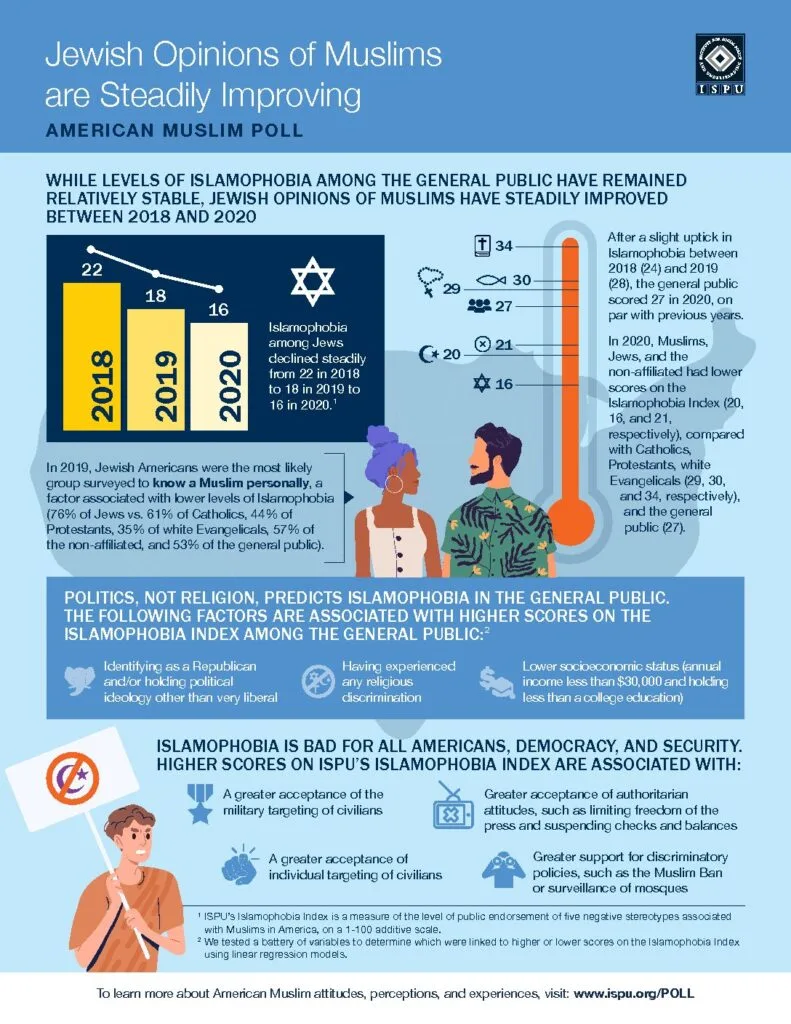
AMP-Infographic-JewishOpinion-8.5x11-v3-pdf-791x1024-1
This infographic highlights findings from our 2020 American Muslim Poll, showing the steady increase of Jewish Americans’ opinions of Muslims between 2018 and 2020.
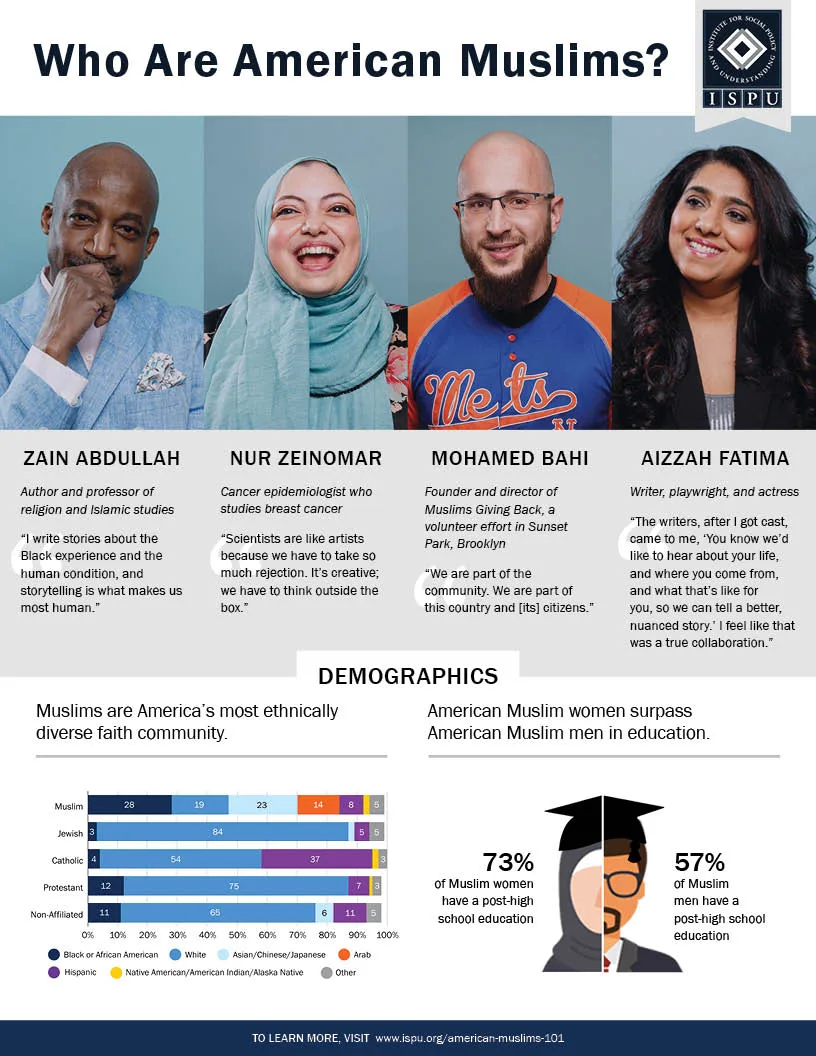
Who-Are-American-Muslims
This handout is a data-driven overview of who Muslims in America are, introducing students to the faces and voices of real Muslims.
8-strategies-low
This handout provides eight strategies for educators on how to best address religious-based bullying of Muslim kids.
This series of infographics highlights important findings from our 2019 American Muslim Poll. Use these as a tool to help students digest data points and support meaningful classroom discussions.
ISPU-Infographic-Weekend-Islamic-School_111219-Final
This handout provides teachers and administrators with recommendations on how to foster high-quality weekend Islamic school experiences.

Classroom Resources

American Muslim Poll
Our annual poll measures attitudes and policy preferences that impact the lives of American Muslims, including results from Catholics, Protestants, Jews, white Evangelicals, and the non-affiliated. Our findings provide empirical evidence that can be used to respond to stereotypes about American Muslims.
Muslims for American Progress

Today, issues surrounding American Muslims are central in our political discourse and popular culture. Yet most Americans say they don’t know a Muslim. The MAP project provides a much-needed, evidence-based portrait of a deeply misunderstood community. (Learn how Muslims are responding to COVID-19 here.)

Bibliography of Books about Islam and Muslims
This collection lists over 250 books published between 1966 and 2017 that focus on Muslims and Islam in the United States.
TEDEd Lesson – What It’s Like to Be a Muslim in America
Use ISPU Director of Research Dalia Mogahed’s TED talk to lead your students through a lesson on choosing empathy over prejudice.
Black Muslim Experiences
From independence to abolition, the Civil Rights Movement to the current movement for Black Lives, Black Muslim history is defined by resilience and struggle. This page highlights Black Muslim experiences that are too often ignored.

Videos for Educators

A new joint report by ISPU and the Islamic Schools League of America (ISLA), finds that full-time Islamic schools in the U.S. face a number of challenges, including recruiting and retaining qualified teachers.

This webinar explores data-driven recommendations tailored for weekend and full-time Islamic schools, helping administrators implement mentorship programs, leadership strategies, and innovative retention practices to strengthen their teaching staff and enhance student success.

Videos for Your Students

The data from ISPU’s American Muslim Poll 2018 showed that most Americans want to live in a country free from bigotry against Muslims. But Islamophobia does exist in the margins—and it’s bad for everybody.
Rebecca Karam, Principal Investigator of ISPU’s Muslims for American Progress (MAP) project, discusses the contributions of Muslims to the state of Michigan, highlighting the stories of some truly inspiring individuals.
When you hear “Muslim women,” what do you think of? Here’s what the data from ISPU’s American Muslim Poll 2017 says.
What would an America without Muslims look like? Watch this video based on ISPU’s Muslims for American Progress (MAP) project to learn more.
How well do you know American Muslims? These facts from ISPU’s American Muslim Poll 2016 just might surprise you.
What is Islamophobia? Why is there so much of it? And how does it impact all of us? ISPU Director of Research Dalia Mogahed answers these questions.

Spiritual Education

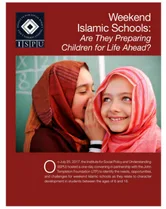
Weekend Islamic Schools: Are They Preparing Children for Life Ahead?

Meet Adam and Mona.
They’re Muslim parents searching for a new weekend Islamic school for their kids. What should they look for? Watch this video to find out.

Additional Resources

These resources may be helpful for educators, though ISPU does not claim responsibility for the content.
ING provides educational resources for teachers, administrators, and staff, including interactive presentations about Muslims and their faith for middle and high school students.
This infographic highlights findings from our 2020 American Muslim Poll, showing the steady increase of Jewish Americans’ opinions of Muslims between 2018 and 2020.

Meeting the Needs of Muslim Youth

This series looks at the unique challenges that today’s young American Muslims face, including religious literacy, online safety, drug use, and issues surrounding both convert care and race.

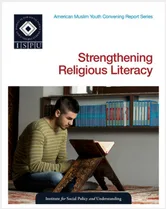
Meeting the Needs of Muslim Youth: Strengthening Religious Literacy
Meeting the Needs of Muslim Youth: Supporting New Muslim Youth
Meeting the Needs of Muslim Youth: Preventing and Treating Drug Use
Meeting the Needs of Muslim Youth: Getting Race Right
Meeting the Needs of Muslim Youth: Growing Up Safe and Positively Engaged Online

Other Reports You May Find Useful

Islamic Schools of the United States: Data-Based Profiles
2019 Survey of MSA West Student Members: Perseverance in the Face of Adversity
Teacher Retention in Religious Schools as Primer for Teacher Retention in Public Schools
State of American Muslim Youth: Research & Recommendations