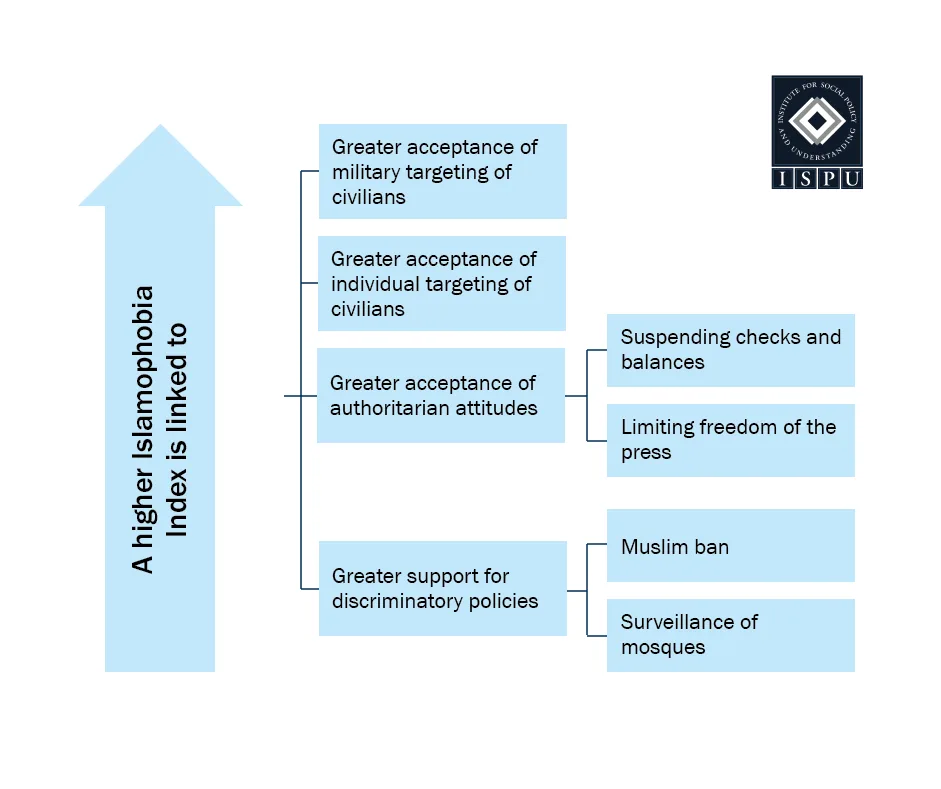
ISPU analysts chose these five variables based on previous research [2] linking these perceptions with greater tolerance for anti-Muslim policies such as mosque surveillance, racial profiling, and greater scrutiny of Muslims at airports, the so-called Muslim Ban, and even taking away voting rights from Americans who are Muslims. These five measures are not meant to cover the totality of public Islamophobia, which can and does include many other false beliefs about Muslims. They are instead meant to offer an evidence-based measure of five perceptions known to be linked to acceptance of discriminatory policies.
Answers to this battery of questions were used to construct an additive scale that measures overall anti-Muslim sentiment. [3] The resulting Islamophobia Index provides a single metric that is easy to understand, compare, and track over time. The Islamophobia Index measures the endorsement of anti-Muslim stereotypes (violent, misogynist), perceptions of Muslim aggression toward the United States, degree of Muslim dehumanization (less civilized), and perceptions of Muslim collective blame (partially responsible for violence), all of which have been shown to predict public support for discriminatory policies toward Muslims. [4]
It is noteworthy that this index, while called simply the “Islamophobia Index,” only measures anti-Muslim sentiment among the public and not the degree to which Islamophobia is institutionalized by the state. Islamophobia is not simply a phenomenon of societal sentiment, but is a structural phenomenon, manifesting in legislation, budget decisions, and law enforcement practices at the local, state, and federal levels. While our index does not measure structural Islamophobia, public tolerance for many of these practices is linked to higher scores on the Islamophobia Index. [5]
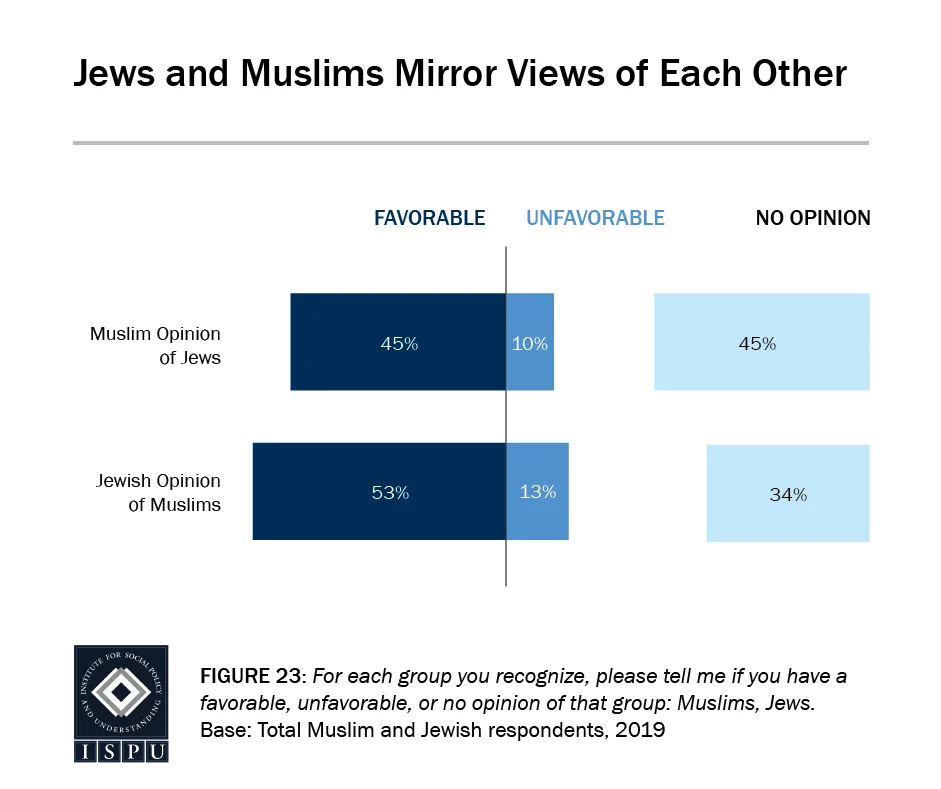
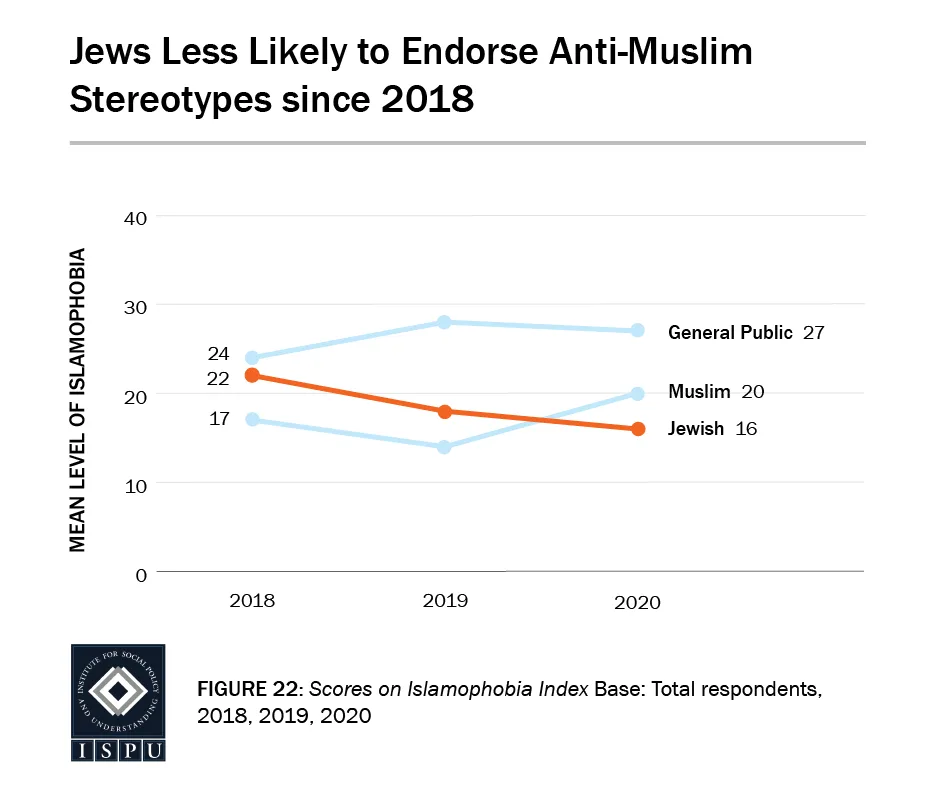
While levels of Islamophobia among the general public have remained relatively stable, Jewish opinions of Muslims have steadily improved between 2018 and 2019:
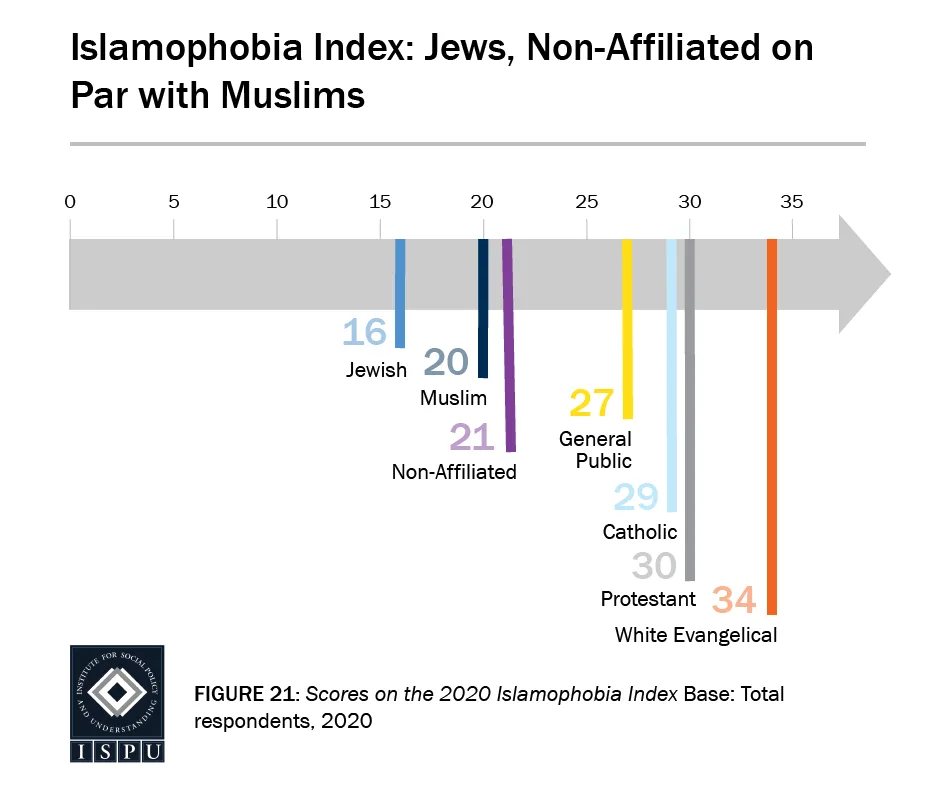
- After a slight uptick in Islamophobia between 2018 (24) and 2019 (28), the general public scored 27 in 2020, on par with previous years.
- Islamophobia among Jews declined steadily from 22 in 2018 to 18 in 2019 to 16 in 2020
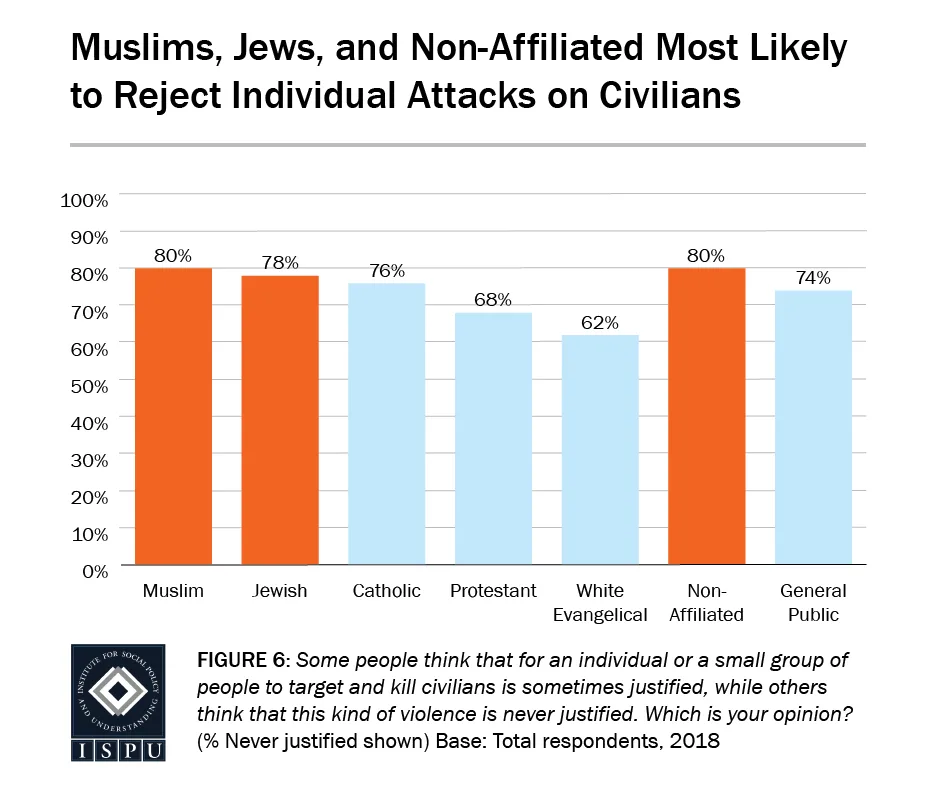
- In 2019, Jewish Americans were the most likely group surveyed to know a Muslim personally, a factor associated with lower levels of Islamophobia (76% of Jews vs. 61% of Catholics, 44% of Protestants, 35% of white Evangelicals, 57% of the non-affiliated, and 53% of the general public).
- In 2020, Muslims, Jews, and the non-affiliated had lower scores on the Islamophobia Index (20, 16, and 21, respectively), compared with Catholics, Protestants, white Evangelicals (29, 30, and 34, respectively), and the general public (27).




 Muslims believe in One God who has sent Prophets and Messengers to humanity with revelations that serve as divine guidance for how to live purposefully and righteously. These Prophets and Messengers include Abraham, Moses, Jesus, and Muhammad (peace be upon them), who all serve as carriers of a singular monotheistic message.