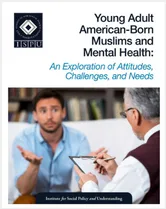
Despite the growing number of American Muslims in the United States, their frequent encounters with prejudice and their increased self-reports of emotional stress, little research has been carried out to understand attitudes toward mental health by Muslim Americans, specifically those born and raised in the United States. On the basis of current demographic trends, it is reasonable to suggest that American-born Muslims represent the future of Islam in the United States.
This study examined the mental health attitudes of 184 American-born Muslim college students. A primarily quantitative survey approach was employed. Additional comments by participants to an open-ended survey question richly described how some of the study’s foci manifest themselves in real-life situations.
This report offers a number of recommendations. Among them, a call to:
- Increase multicultural competence specific to treating young adult American-born Muslims for professional mental health treatment providers.
- Hire and train Muslim college chaplains.
- Educate the Muslim community and religious leaders on issues pertaining to mental health.
- Develop approaches to reduce mental health stigma in the American Muslim community through religious institutions.
- Increase funding for further research on the mental health needs of young adult American-born Muslims and American Muslims in general.
Insert your information to download the report.
ISPU uses this information to see which organizations and individuals are using our materials in an effort to better serve our audiences. We’ll also contact you (infrequently) with new research updates so you’re up to date on the latest from our research team.