
The American Mosque 2020:

Growing and Evolving (Mosque Survey)

Biography

The US Mosque Survey 2020 is a comprehensive statistical study of mosques located in the United States. The survey is an ongoing decadal survey which was conducted previously in 2000 and 2010. Reports featuring the results will occasionally include results from a 1994 survey which was conducted by the Islamic Resource Center, using the same methodology as the US Mosque Surveys.

The purpose of the US Mosque Survey is to conduct a scientific study that will generate accurate information about most aspects of the American mosque. The goal is to provide a detailed portrait of the American mosque to dispel misconceptions and to help mosque leaders and participants better understand their mosque, hopefully leading to improvements.

Reports 1 and 2 of the US Mosque Survey 2020

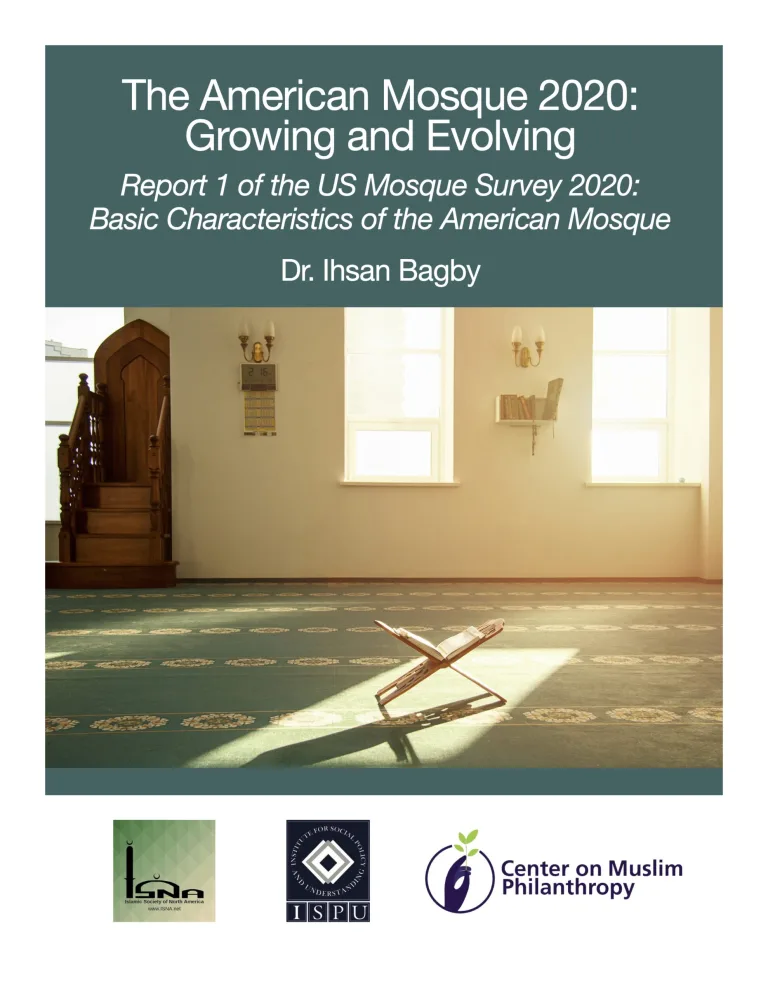
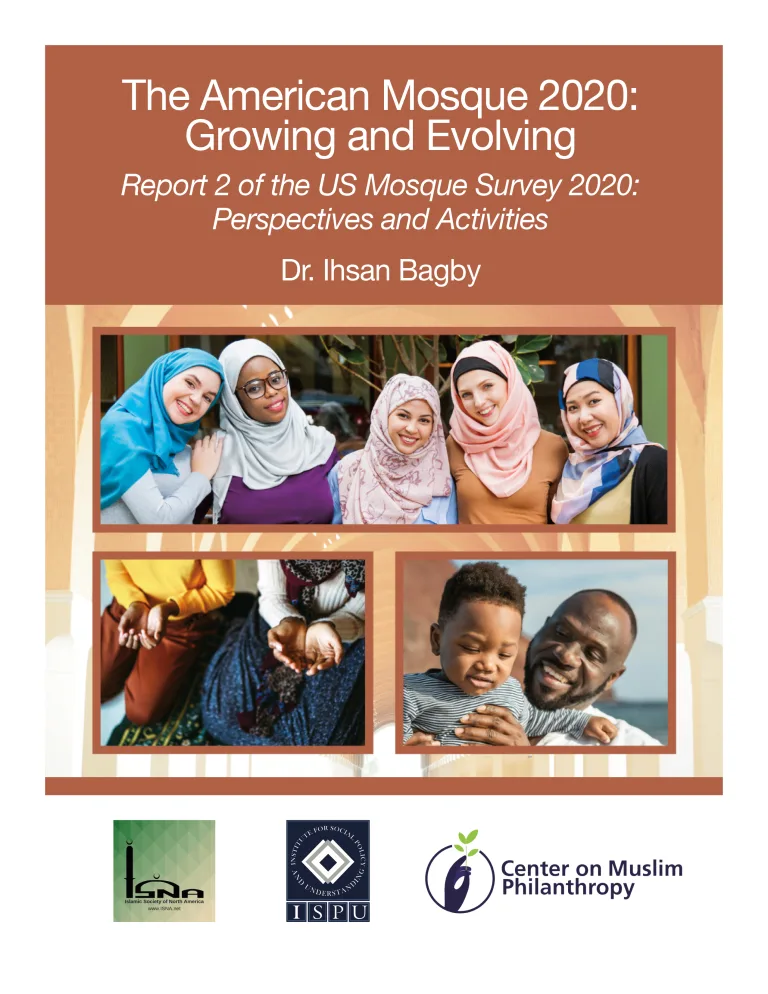
The results of the US Mosque Survey 2020 are divided into two reports authored by Dr. Ihsan Bagby. Report 1 focuses on essential statistics, mosque participants, and mosque administration. Report 2 focuses on Islamic approaches in understanding Islam, perspectives of mosque leaders on American society, mosque activities, and women in the mosque.

The results of the US Mosque Survey as detailed in reports 1 and 2 include both Shi’ite and Sunni mosques. However, it was thought appropriate to have a separate section for Shi’ite mosques in both reports to reveal similarities and differences with Sunni mosques.

Read Report 1: Basic Characteristics

Read Report 2: Perspectives and Activities

Infographics

10 Essential Facts about the American Mosque in 2020
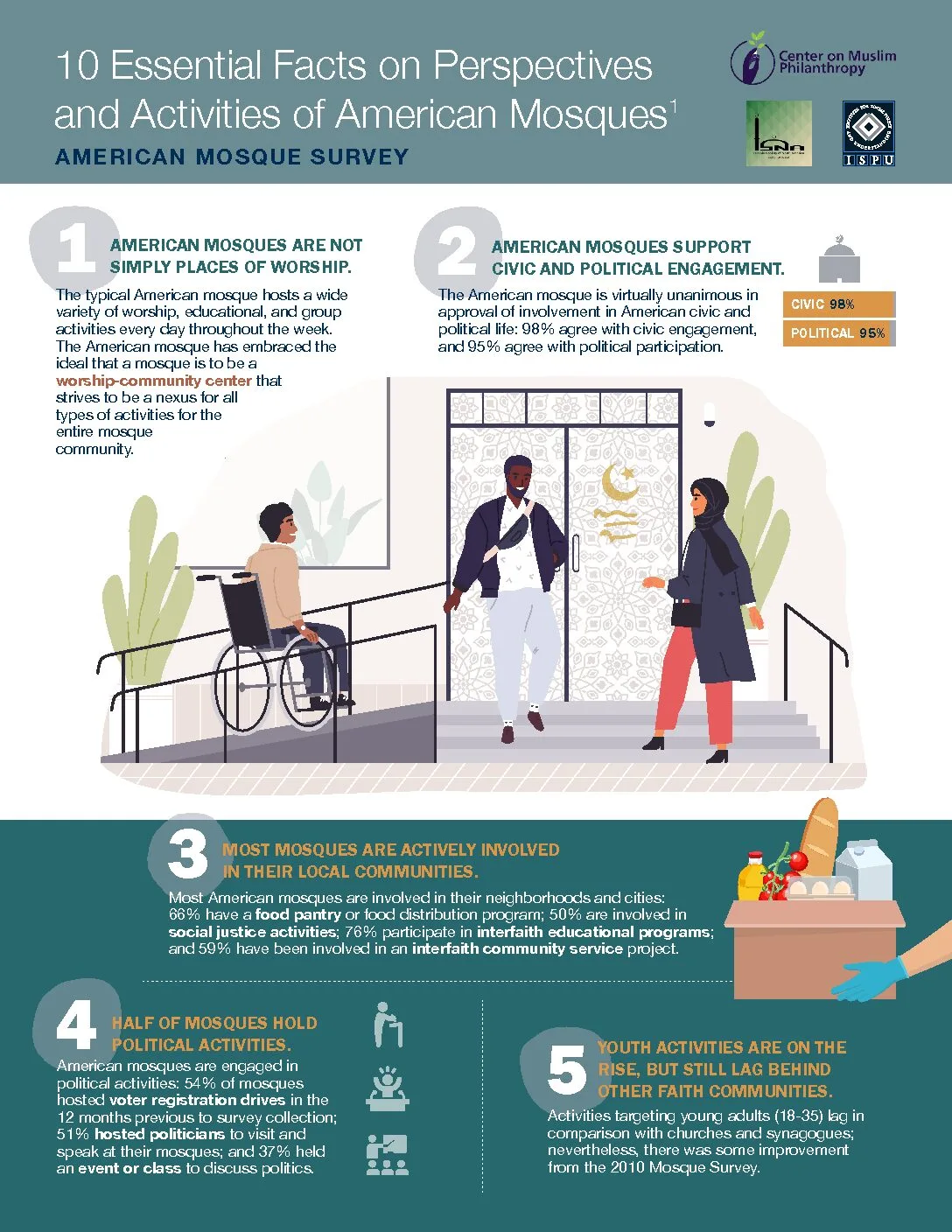
10 Essential Facts on Perspectives and Activities of American Mosques

Mosque Survey Reports

The US Mosque Survey 2020 is a comprehensive statistical study of mosques located in the

The US Mosque Survey 2020 is a comprehensive statistical study of mosques located in the

This document contains a selection of key findings from Report 2 of the US Mosque

This year’s American Muslim Poll, the fifth annual survey of its kind, released shortly before

Three Decades of US Mosque Survey

All of the US Mosque Surveys (2000, 2010, and 2020) were conducted in collaboration with a larger study of American congregations called Faith Communities Today (FACT), which is a project of the Cooperative Congregational Studies Partnership (CCSP), a multi-faith coalition of numerous denominations and faith groups, headquartered at Hartford Seminary. The strategy of FACT is to develop a common questionnaire and then have the member faith groups use that questionnaire to conduct a survey of their respective congregations. The US Mosque Surveys took the FACT common questionnaire and modified it to fit the mosque context.

The primary sponsors of the US Mosque Survey 2020 include many organizations: Islamic Society of North America (ISNA), Center for Muslim Philanthropy, Institute for Social Policy and Understanding (ISPU), and the Association of Statisticians of American Religious Bodies (ASARB). Other important supporters include Intuitive Solutions, International Institute of Islamic Thought (IIIT), Islamic Circle of North America’s Council for Social Justice, Council on American-Islamic Relations (CAIR), and Hartford Institute for Religion Research (Hartford Seminary).

Related Reports

Countering Anti-Muslim Opposition to Mosque and Islamic Center Construction and Expansion: Full Toolkit May 23,

This document contains a selection of key findings from Report 2 of the US Mosque

This sixth report in ISPU’s ‘Reimagining Muslim Spaces’ series presents a case study of the

The Reimagining Muslim Spaces (RMS) study aims to stimulate and support mosques and community centers

This fifth report in ISPU’s ‘Reimagining Muslim Spaces’ series presents a case study of the

This is the Executive Summary for ISPU’s Reimagining Muslim Spaces (RMS) report on creating a

In an effort to enable Muslim communities across the country to build inviting, resilient and

This fourth report in ISPU’s “Reimagining Muslim Spaces” series presents a case study of MakeSpace,

This second report in ISPU’s “Reimagining Muslim Spaces” series presents a case study of the

This first report in ISPU’s “Reimagining Muslim Spaces” series presents a case study of the

How can we provide better support to convert youth? According to Ta’leef Collective, over 20,000

How can predominately South Asian and Arab American mosques promote a greater understanding of race

This report is intended as a best practices guide for faith communities, as well as

This report is intended as a best practices guide for U.S. municipal authorities—elected officials, municipal

Mosques are the cornerstone of the Islamic experience in America. One sign of the growing

RMS Inclusivity Workshop Toolkit June 22, 2017 By: Ihsan Bagby After conducting extensive research, analyzing

This third report in ISPU’s “Reimagining Muslim Spaces” series presents a case study of the

Report Partner Organizations

Logo for the Center on Muslim Philanthropy featuring a dark hand inside a circle holding a green plant, with the organizations name in bold purple text to the right.

Center on Muslim Philanthropy

The Center on Muslim Philanthropy seeks to strengthen Muslim philanthropy in United States by promoting research, best practices and education. We imagine a social good community of non-profit professionals, social entrepreneurs, and philanthropists fulfilling their mission collaboratively and making the world a better place.

Logo of the Islamic Society of North America (ISNA) on a green geometric background, featuring stylized text and crescent shapes, with the website address www.ISNA.net below.

Islamic Society of North America

At ISNA, we believe that Muslim Americans are a positive force in society through their work for spiritual and civic engagement in the US and beyond. Our mission is to foster the development of the Muslim community, interfaith relations, civic engagement, and a better understanding of Islam. We strive to be an exemplary and unifying Islamic organization in North America that contributes to the betterment of the Muslim community and society at large
Logo of the Institute for Social Policy and Understanding, featuring a geometric diamond design above the acronym ISPU and the full name circling the diamond pattern./
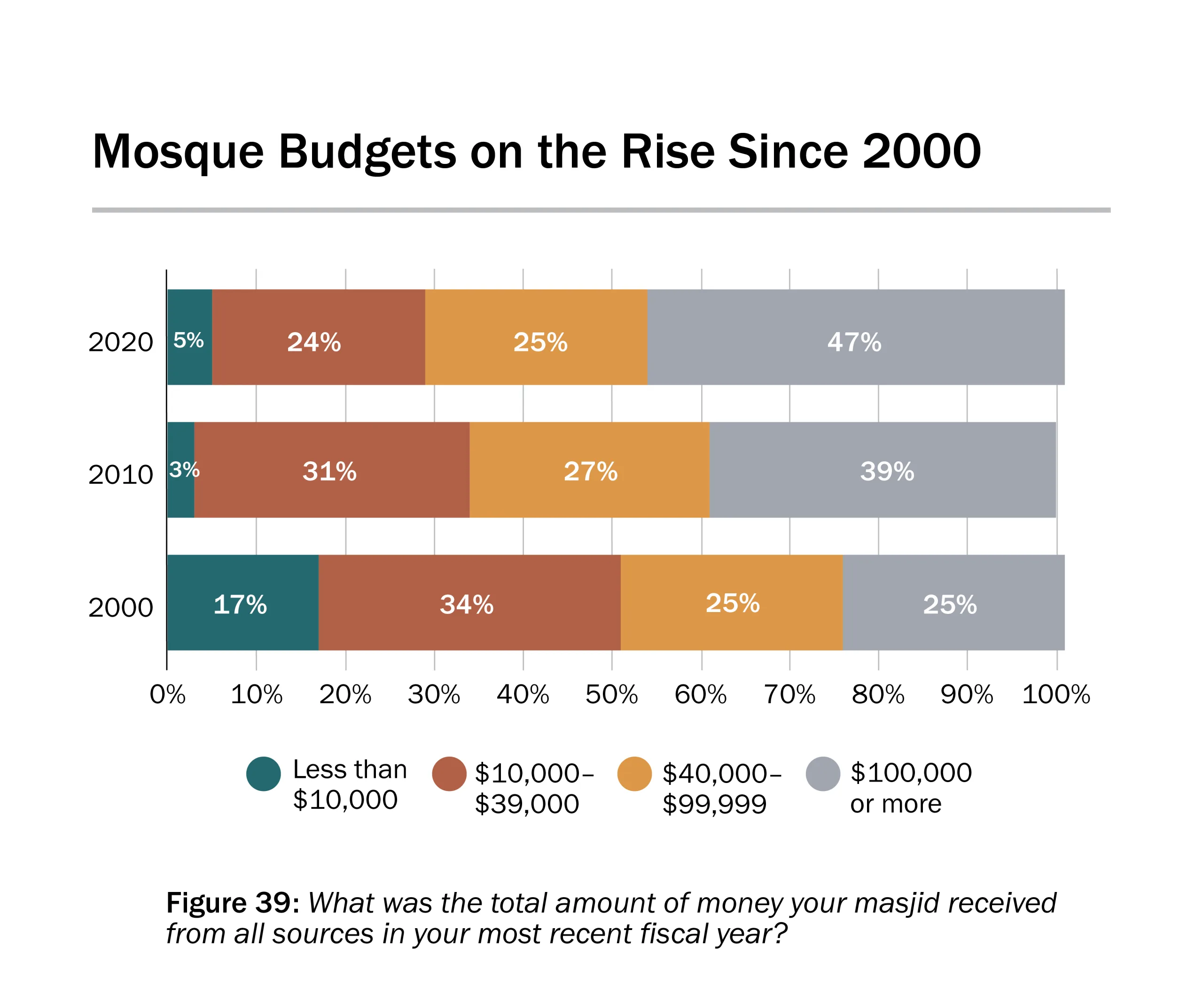
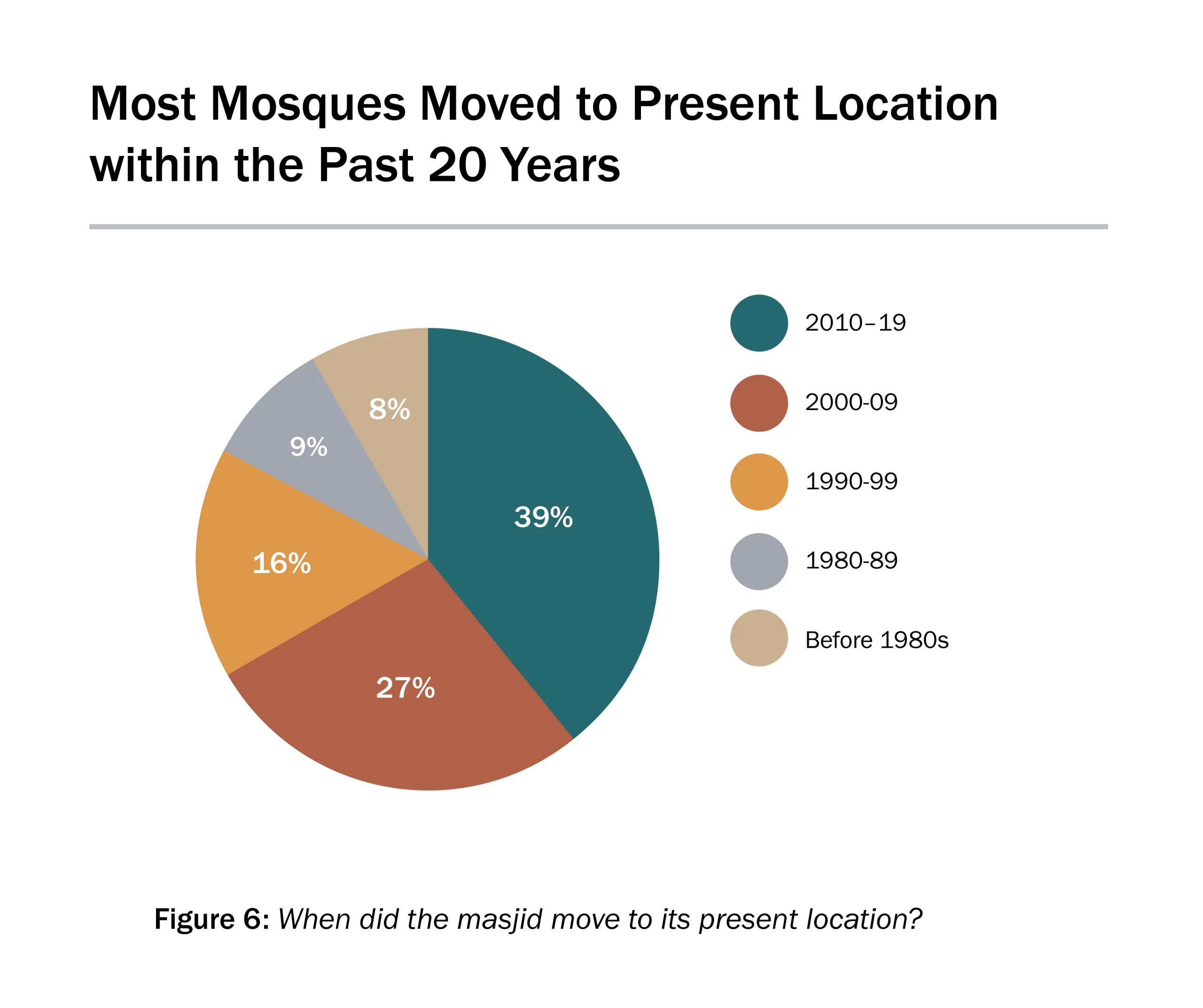
Graphs for Report 1 of the US Mosque Survey 2020

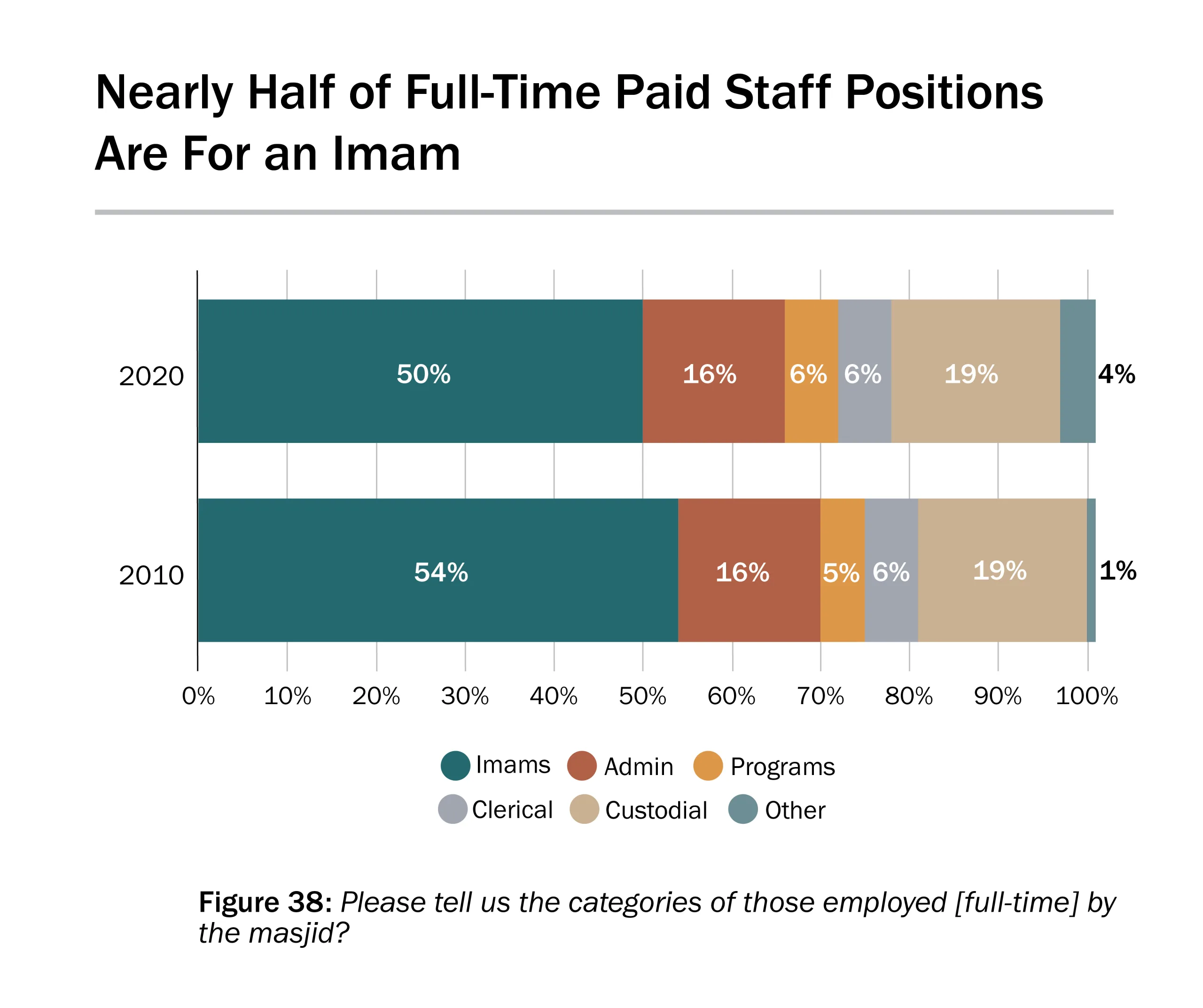
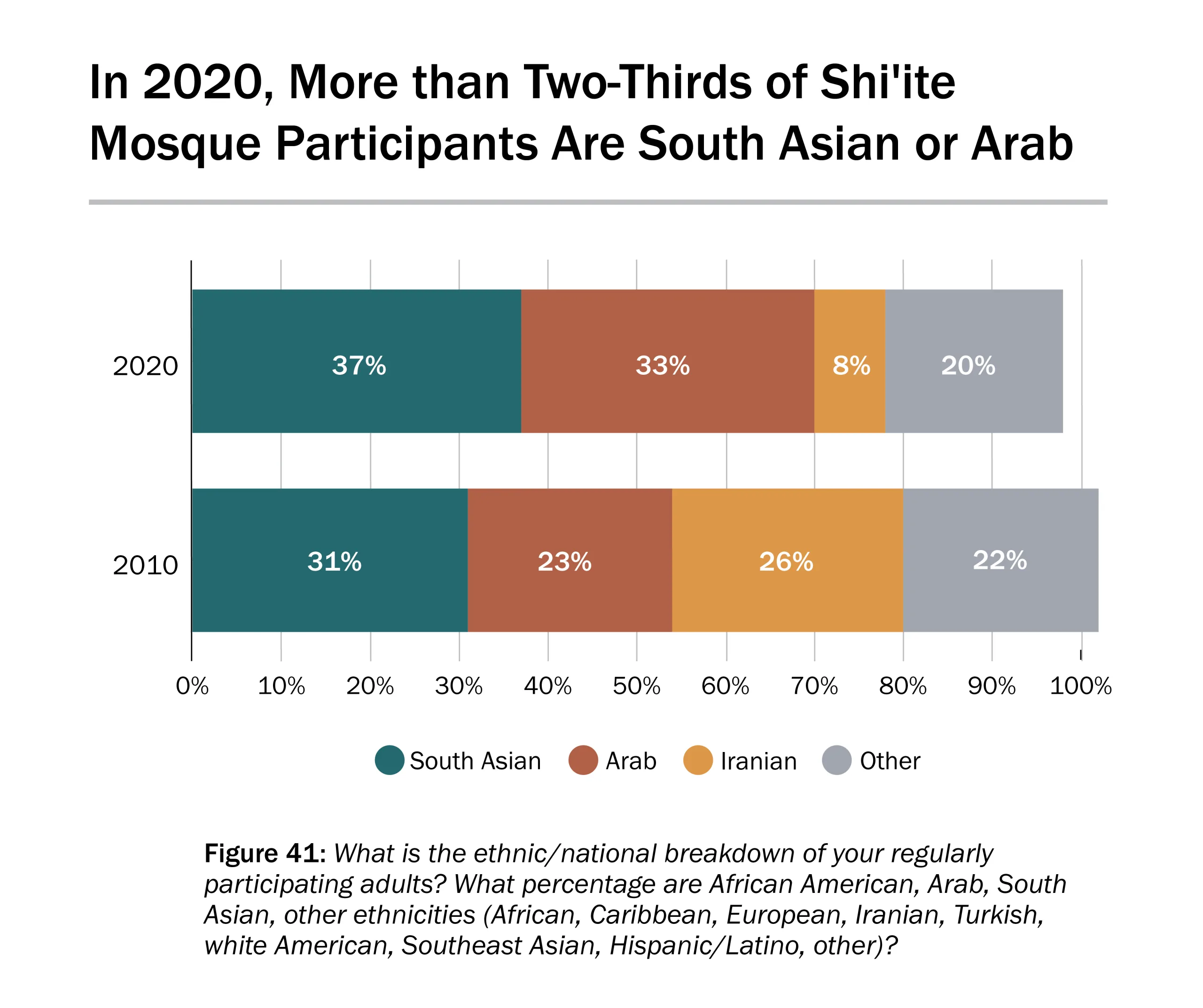
Click here to download all 41 graphs from Report 1.

Mosque Numbers and Locations

Mosque Opposition and Safety

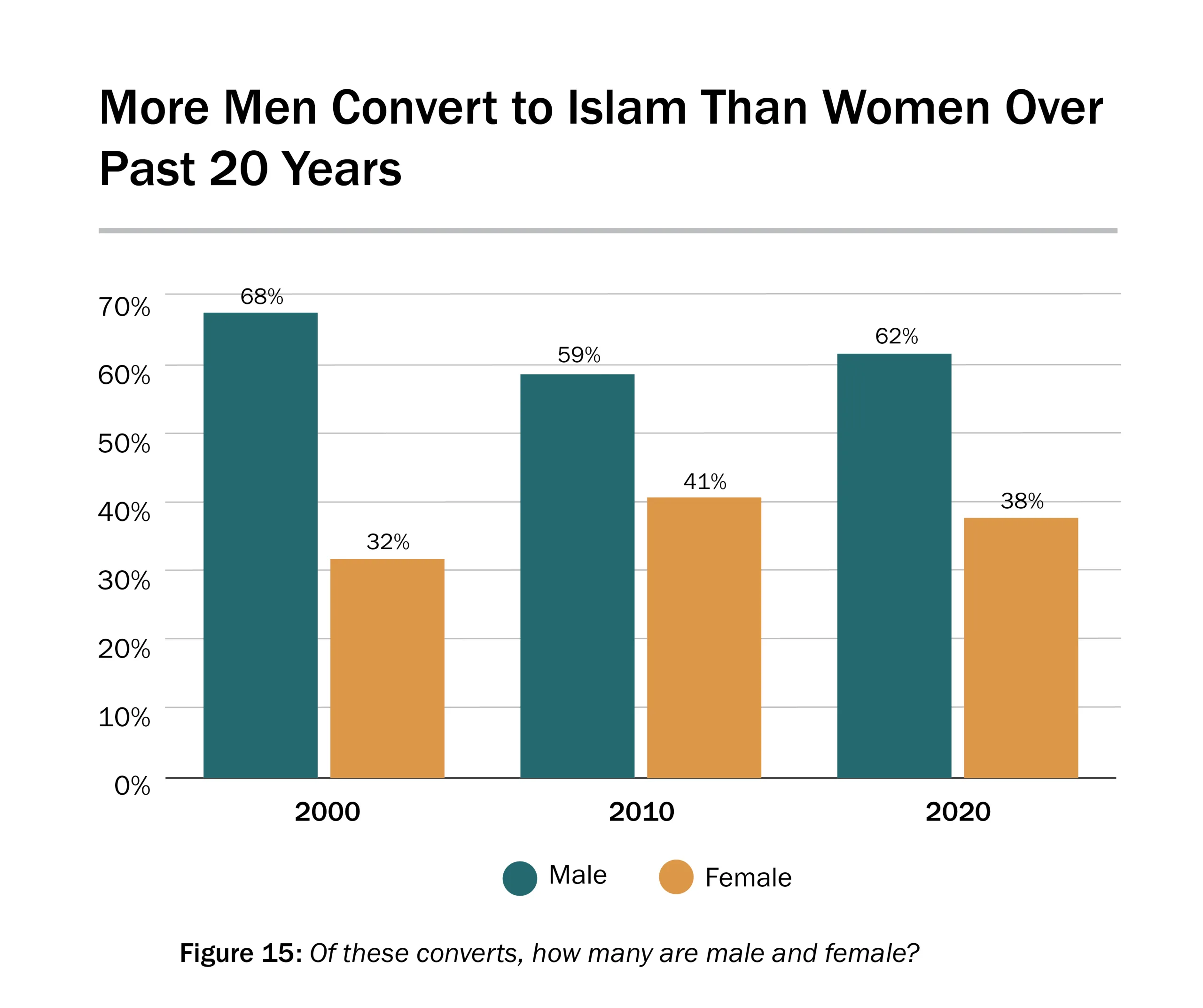
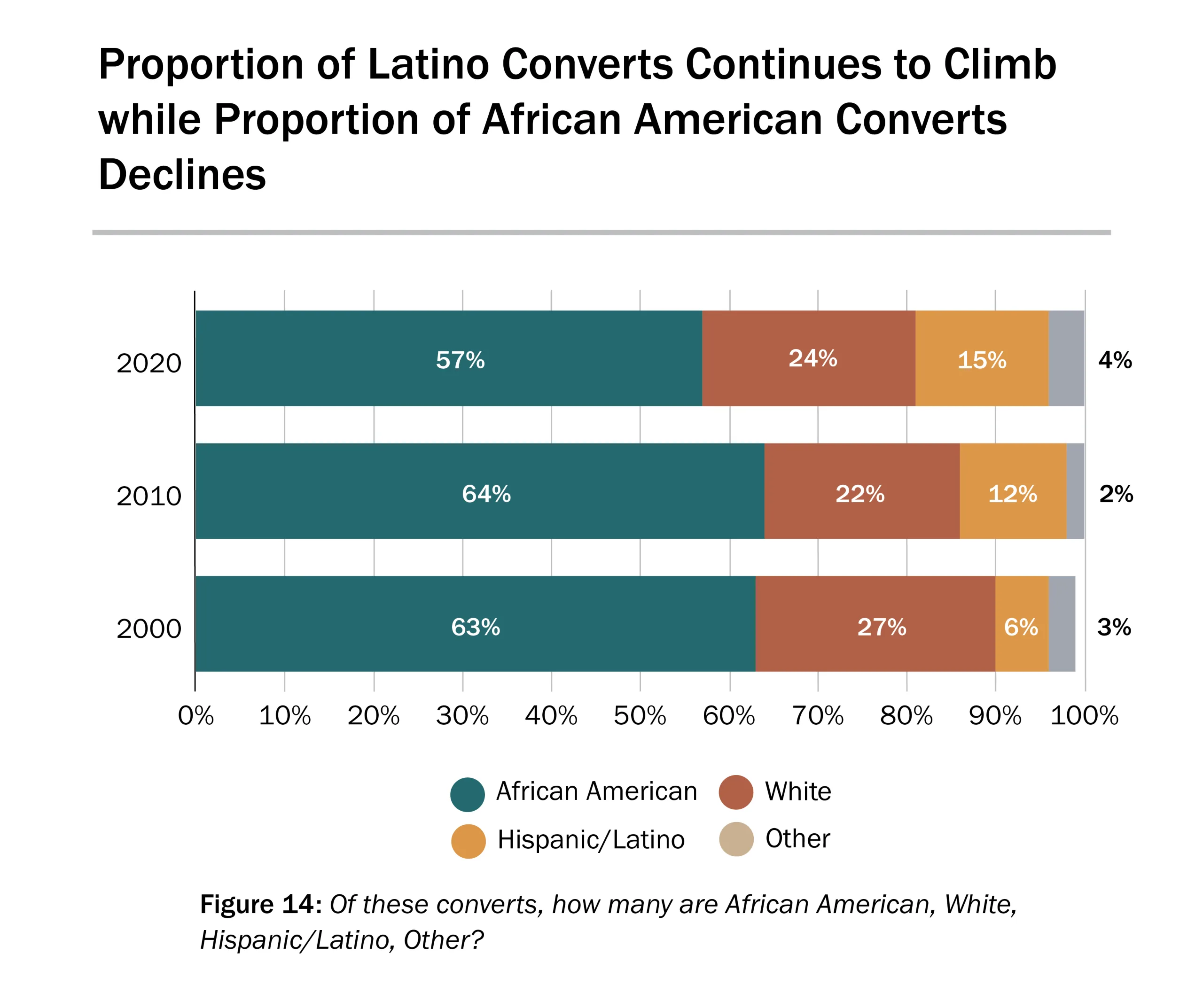
Conversions and Mosque Attendance

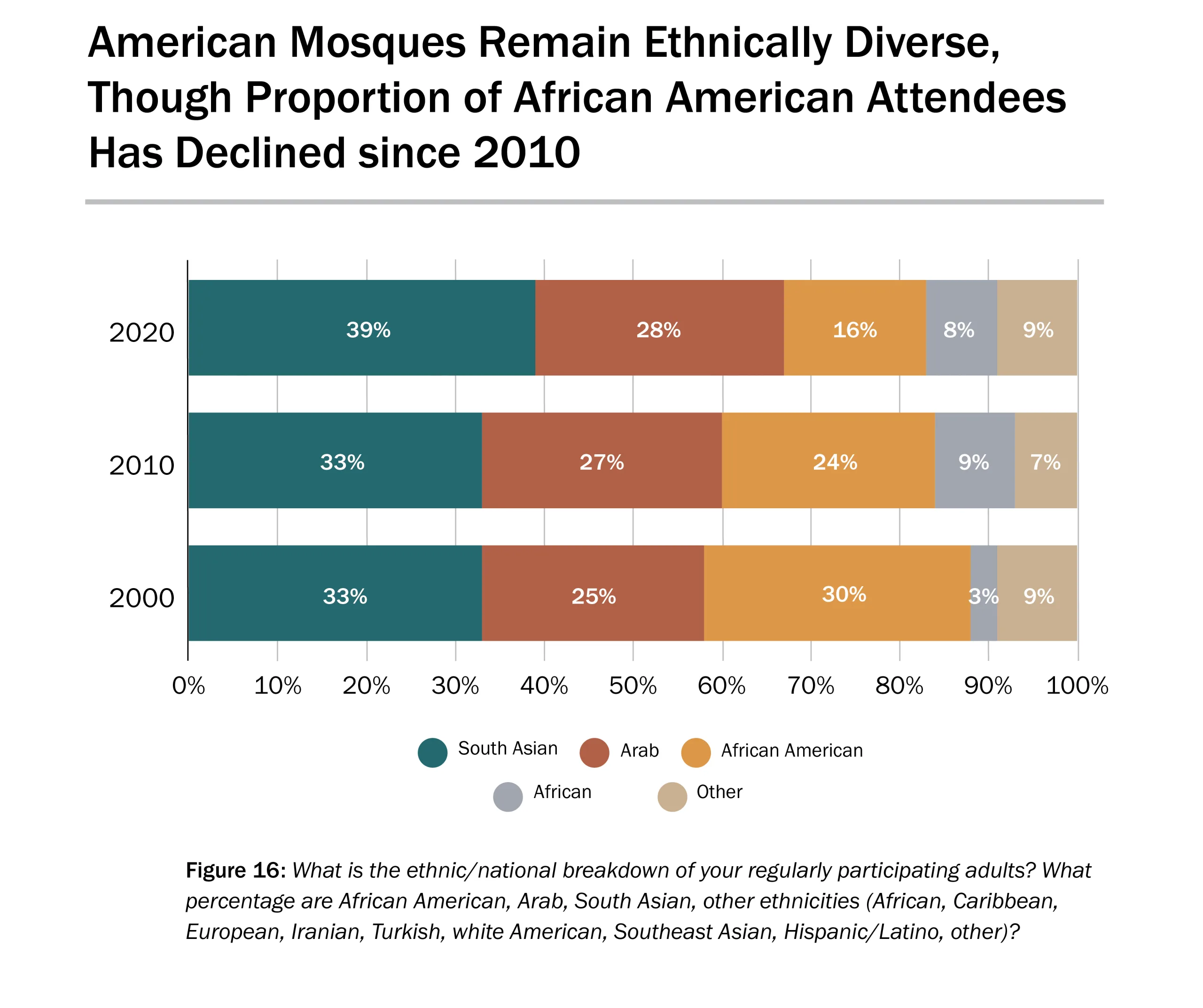
African American Mosques and Attendees

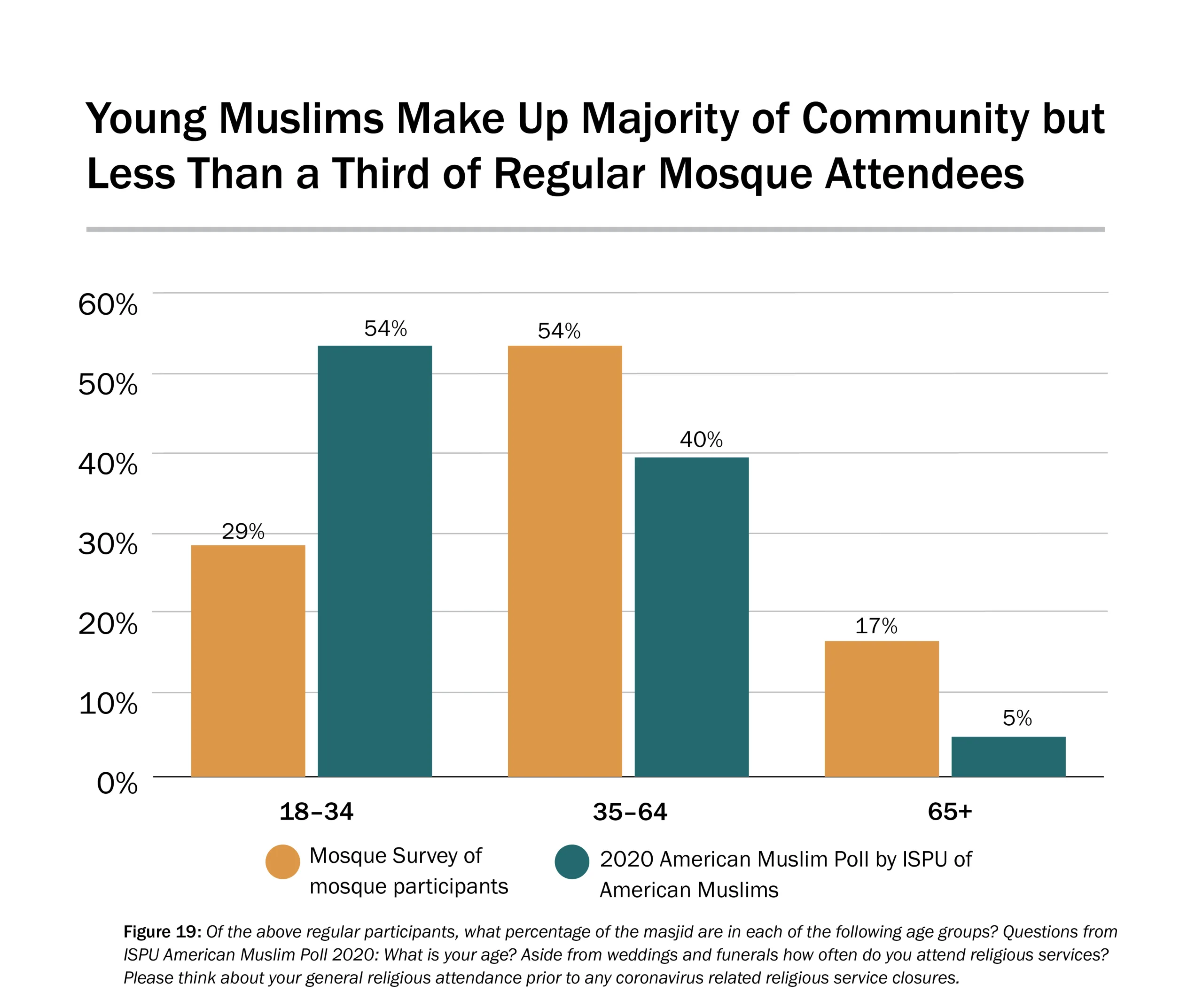
Young Adult Muslims

Imam Age, Employment, and Education

Imam Nationality and Salary

Mosque Governing Bodies

Mosque Boards, Committees, and Decision Makers

Mosque Conflict and Employment

Mosque Budgets and Fundraising

Shi’ite Mosques

Graphs for Report 2 of the US Mosque Survey 2020

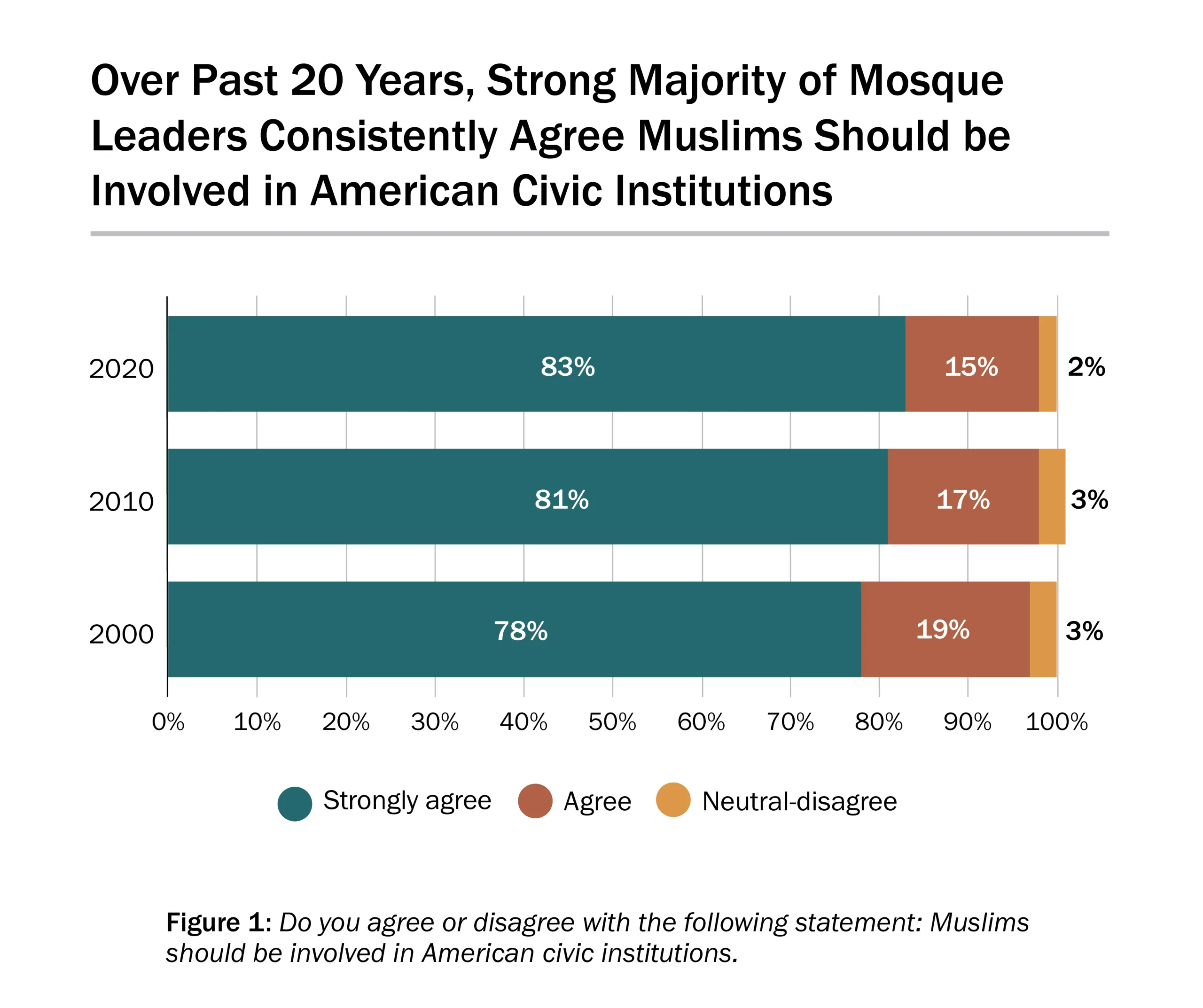
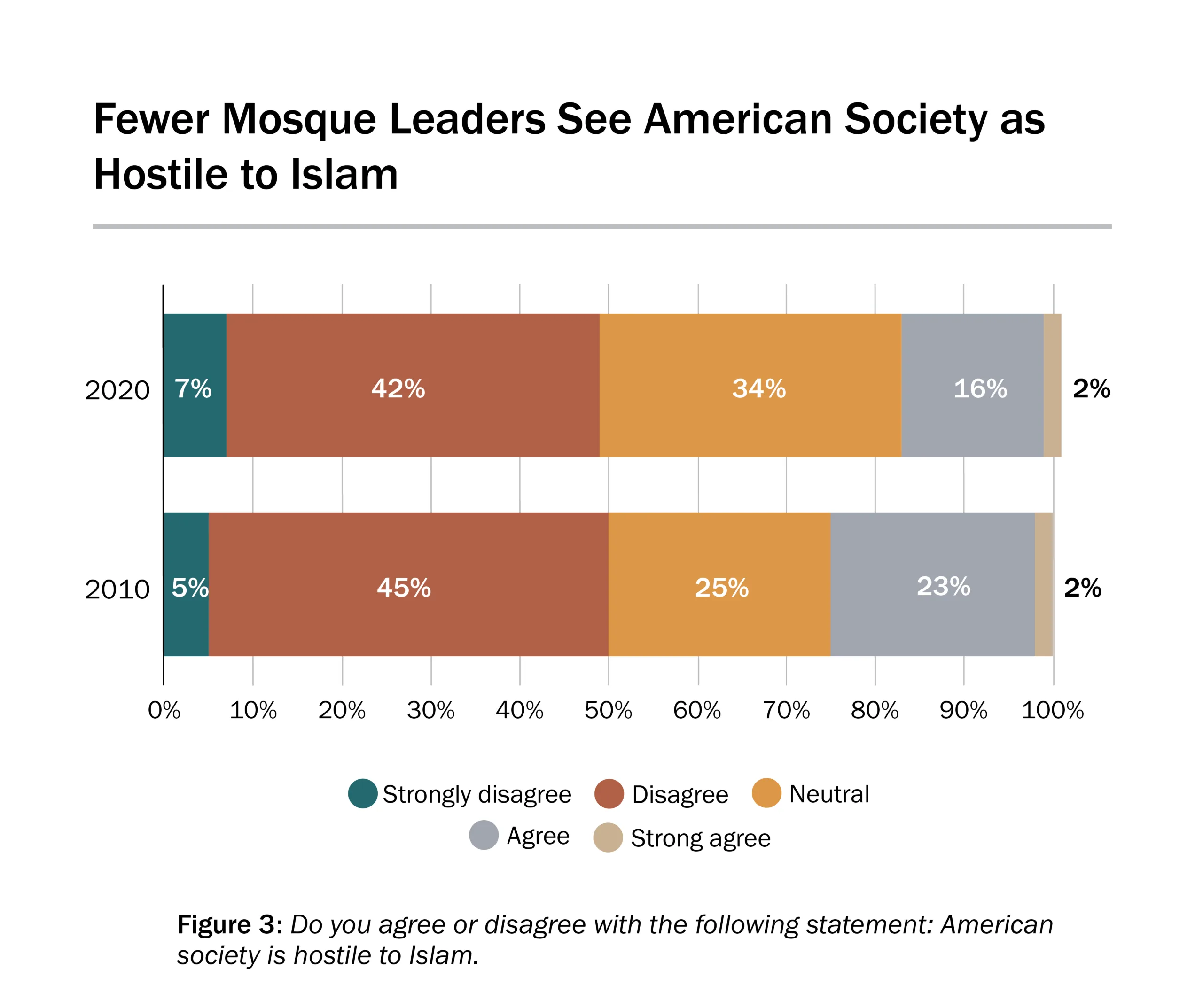
Click Here to download all 28 graphs and figures from Report 2.

Involvement in and Perspectives on American Society

Mosque Programs, Groups, and Interfaith Activities

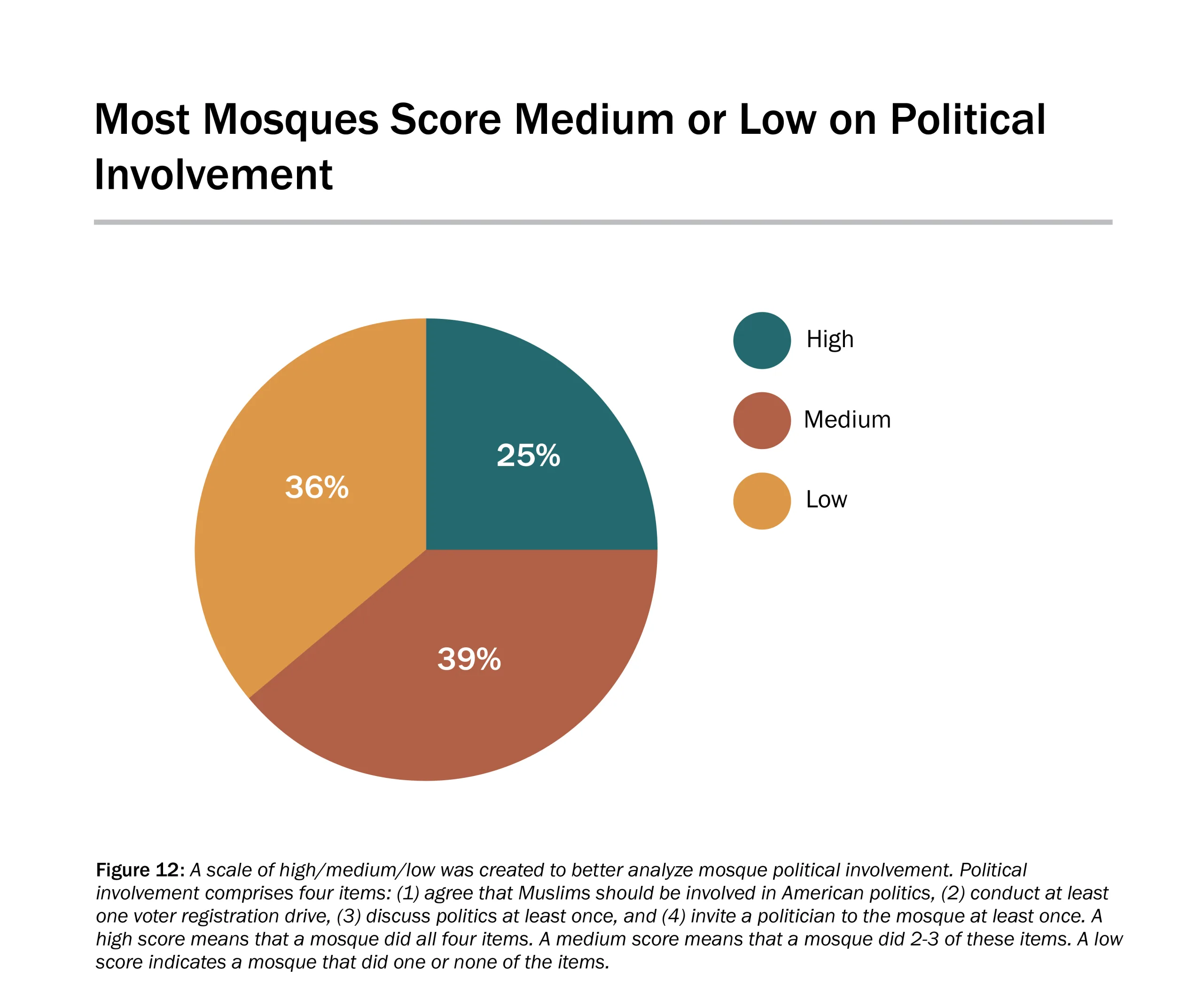
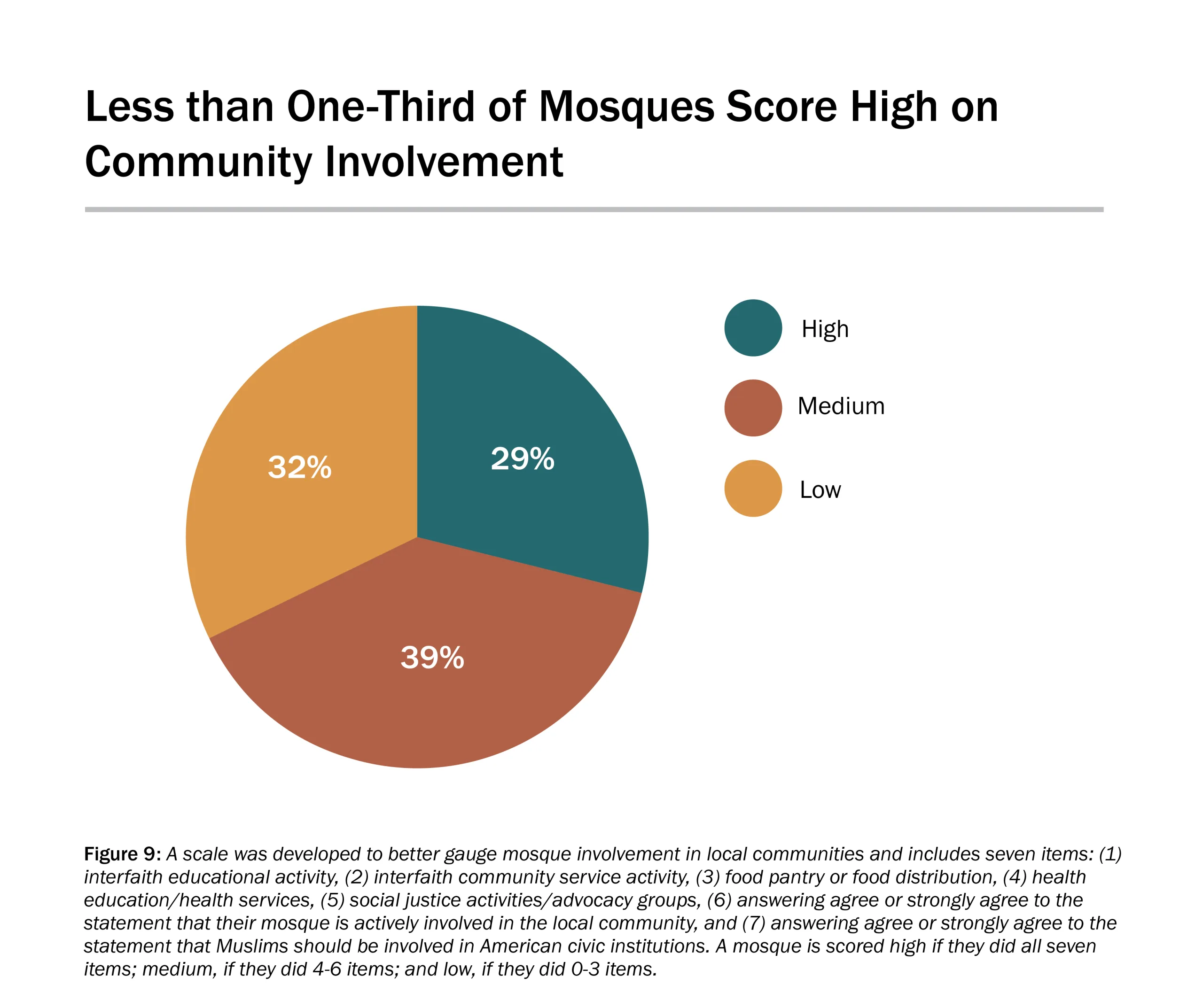
Community Involvement, Political Activities, and Islamic Schools

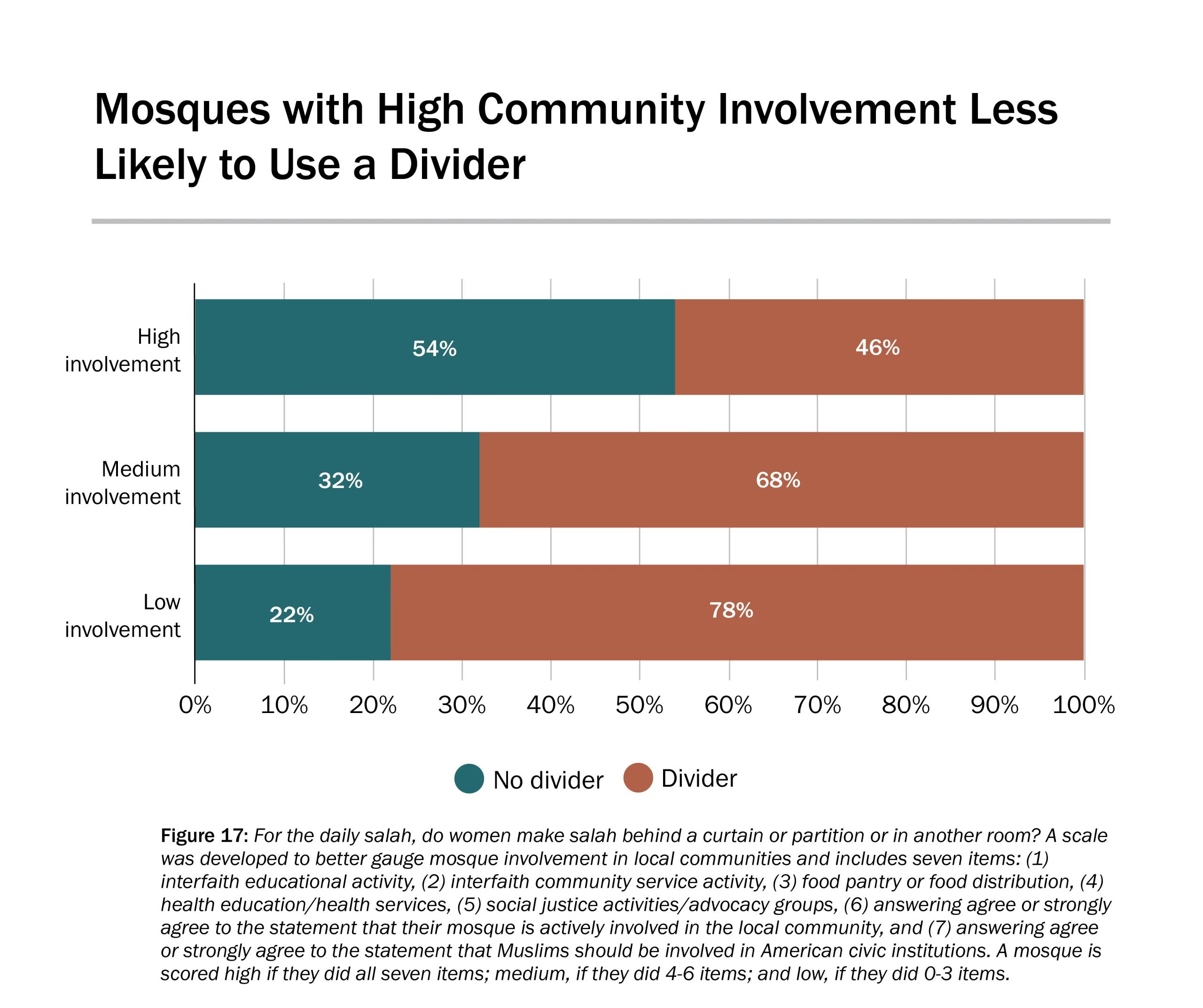
Use of Divider in the Mosque

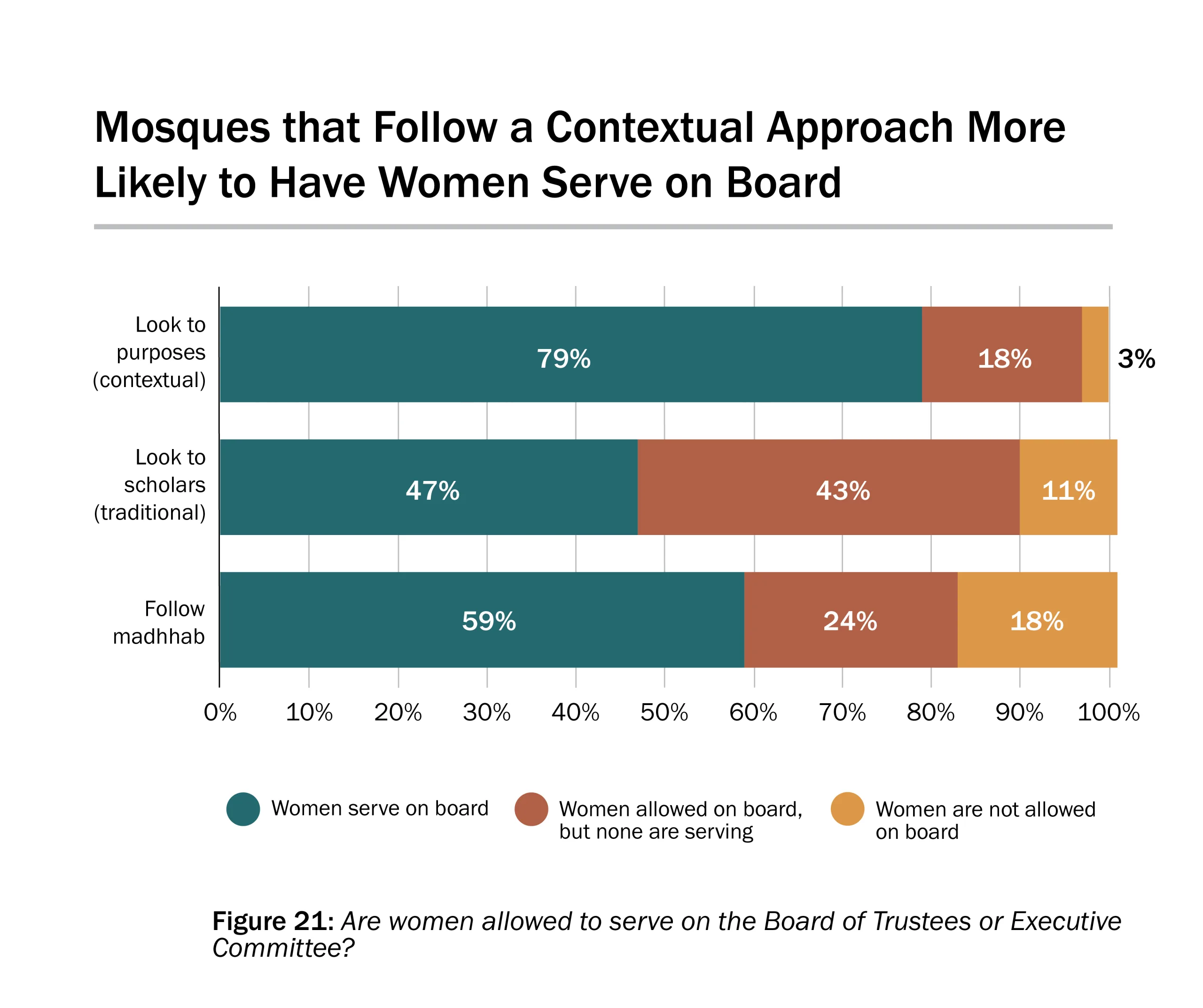
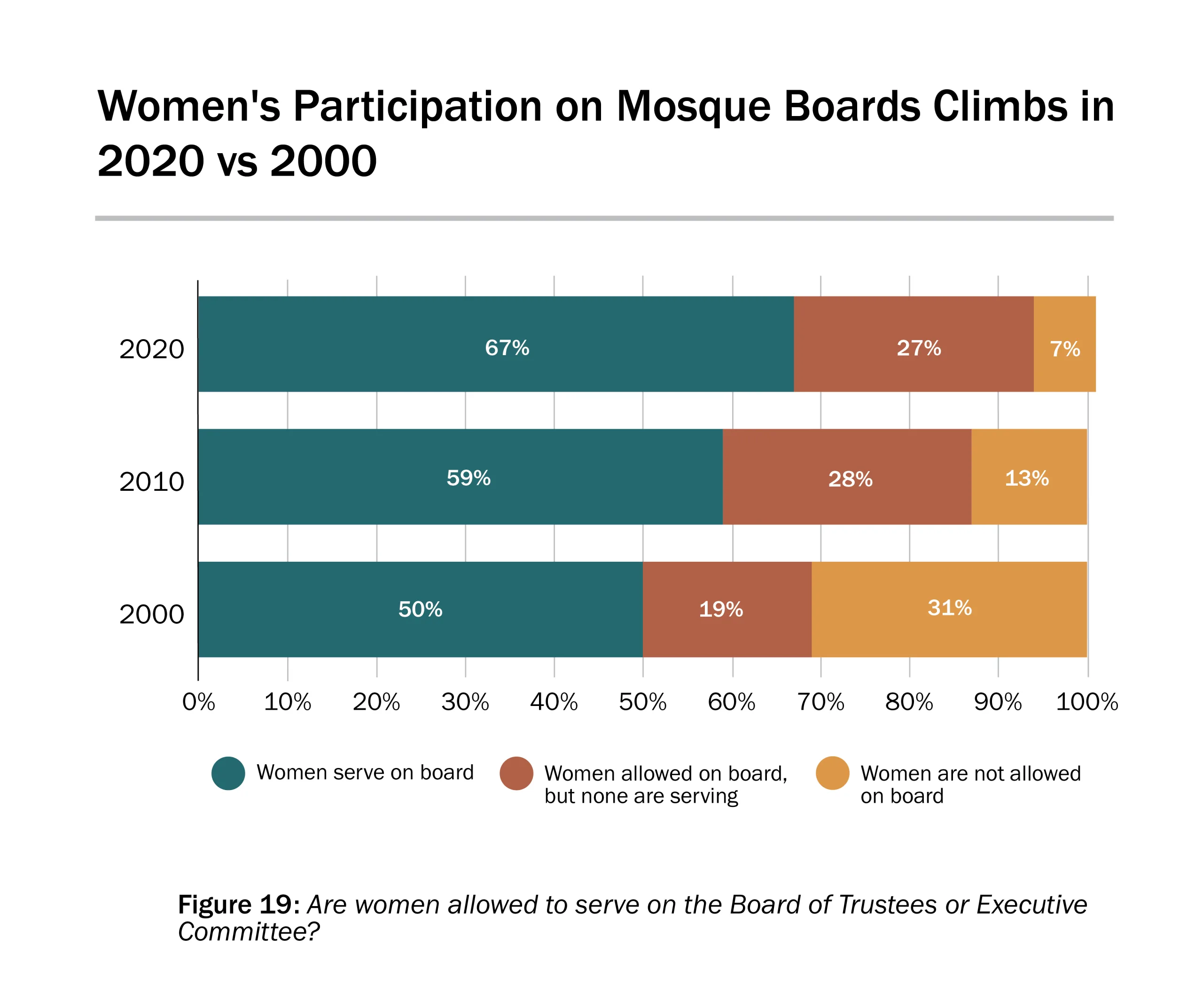
Women’s Participation on Mosque Boards

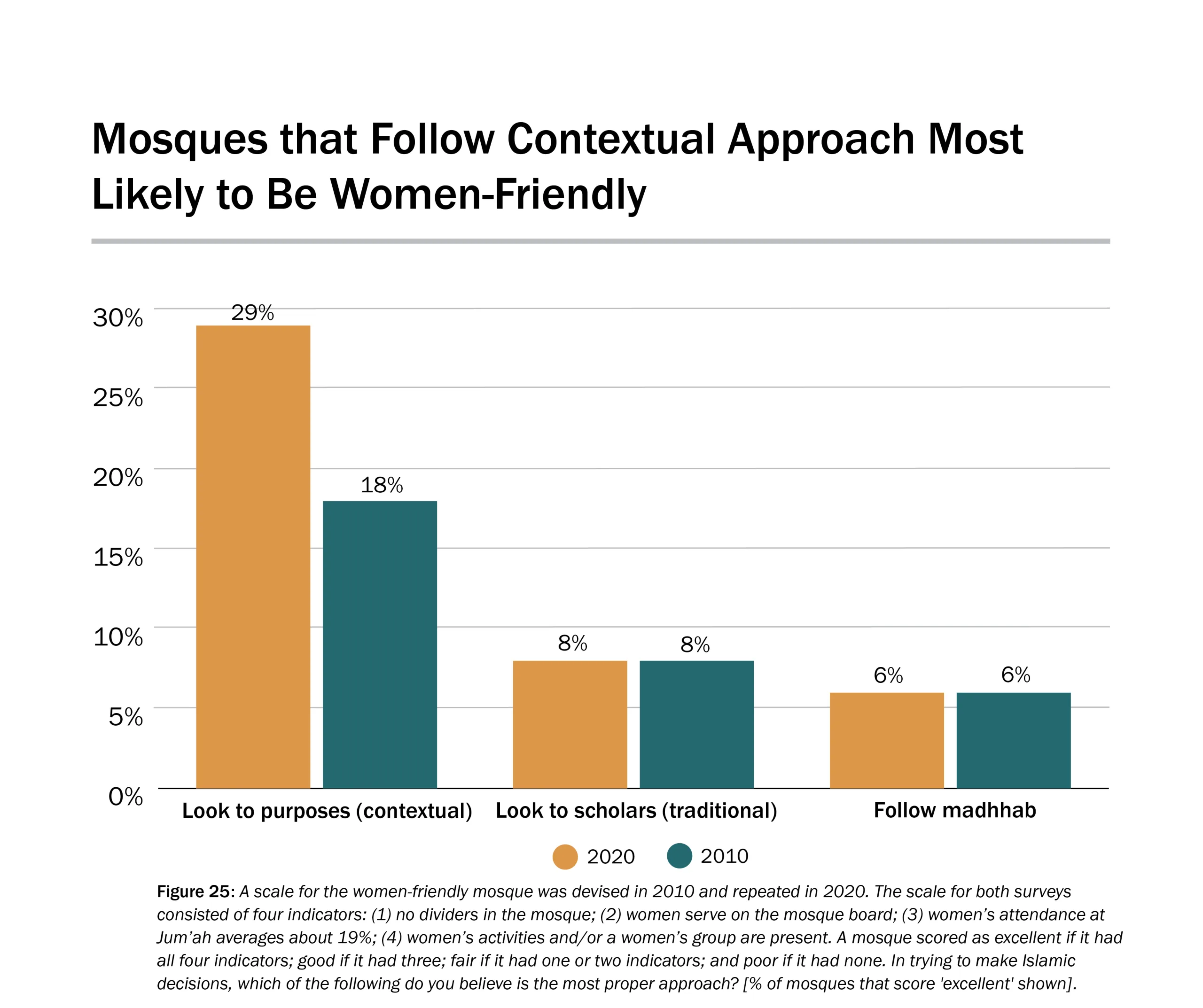
Women’s Jum’ah Attendance, Women’s Programs, and the Women-friendly Mosque

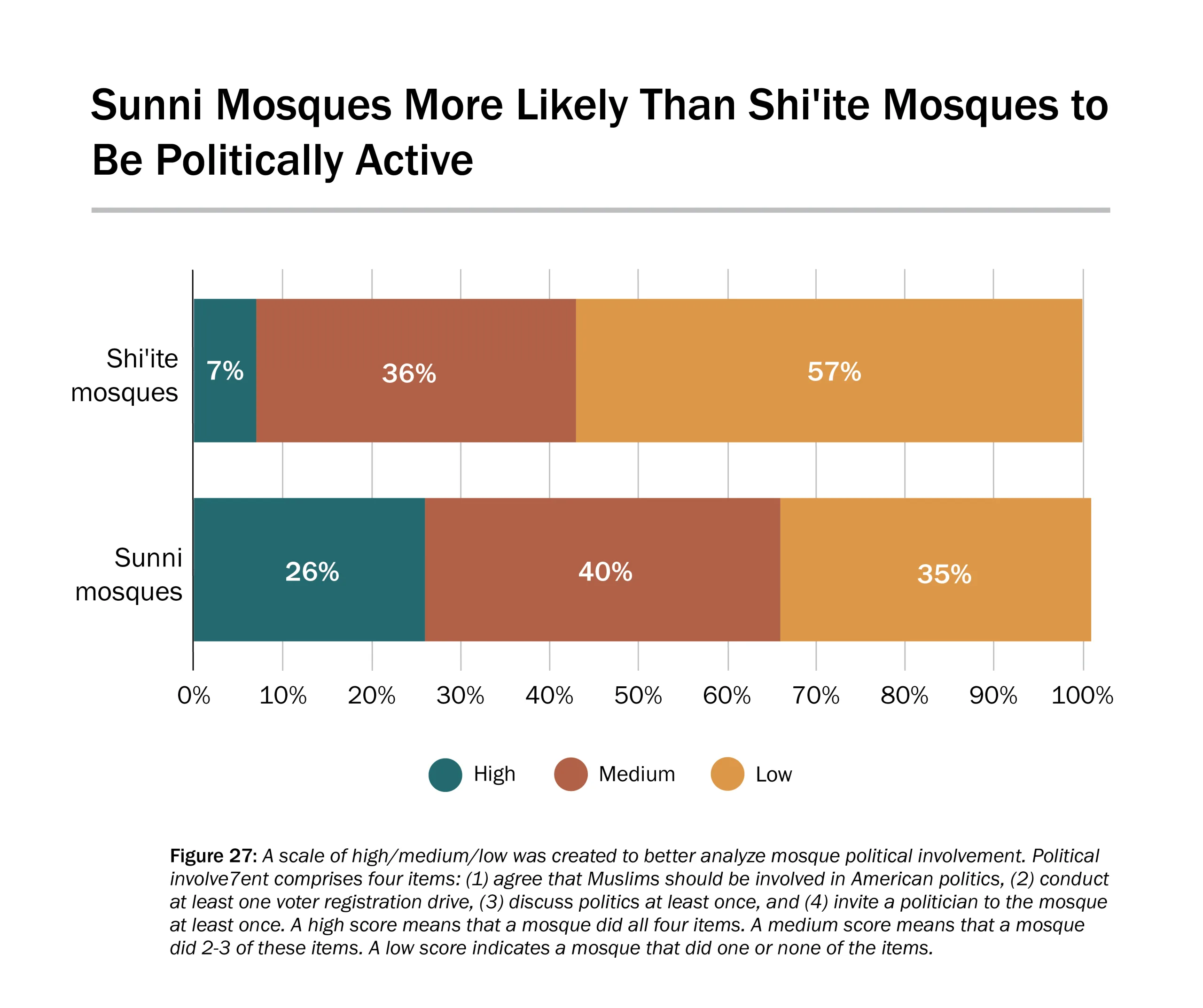
Shi’ite Mosques

Videos

This webinar, published on July 6, 2021, is the first of two sessions covering the findings of the US Mosque Survey 2020, with a focus on Report 1: Basic Characteristics of the American Mosque. ISPU’s Dalia Mogahed moderates a panel with report author and primary investigator Dr. Ihsan Bagby, Azhar Azeez (ISNA), Tayyab Yunus (CMP), and Dr. Scott Thumma (Hartford Seminary).

This webinar, published on August 23, 2021, is the second of two sessions covering the findings of the US Mosque Survey 2020, with a focus on Report 2: Perspectives and Activities. ISPU’s Dalia Mogahed moderates a panel with report author and primary investigator Dr. Ihsan Bagby, Dr. Ingrid Mattson (Hurma Project, ISNA), and Dr. Besheer Mohamed (Pew Research Center).


Meet the Research Advisory Committee

Dr. Ihsan Bagby
Primary Investigator and Report Author
Associate Professor of Islamic Studies, University of Kentucky

Dalia Mogahed
Director of Research, Institute for Social Policy and Understanding

Riad Ali
President and Founder, American Muslim Research and Data Center

Dr. Zahid Bukhari
Director, ICNA Council for Social Justice

Dr. Besheer Mohamed
Senior Researcher, Pew Research Center

Dr. Shariq Siddiqui
Director, Muslim Philanthropy Initiative, Indiana University

Dr. Scott Thumma
Professor of Sociology of Religion, Hartford Seminary

ISPU Publication Staff

Dalia Mogahed
Director of Research

Erum Ikramullah
Research Project Manager

Katherine Coplen
Director of Communications

Rebecka Green
Communications and Creative Media Specialist